Quick Facts: Hornpipes Transition Network
Table of Contents
- Introduction: The Bounce of the Irish Session
- What Makes a Hornpipe Versatile? (Degree Centrality vs. Popularity)
- The Studio vs. Session Paradox: The Locked Hornpipes
- Visualizing the Hornpipe Transition Network
- The 25 Most Versatile Irish Hornpipes
- Deep-Dive Feature Callouts
- Frequently Asked Questions
- Conclusion & Repertoire Recommendations
Introduction: The Bounce of the Irish Session
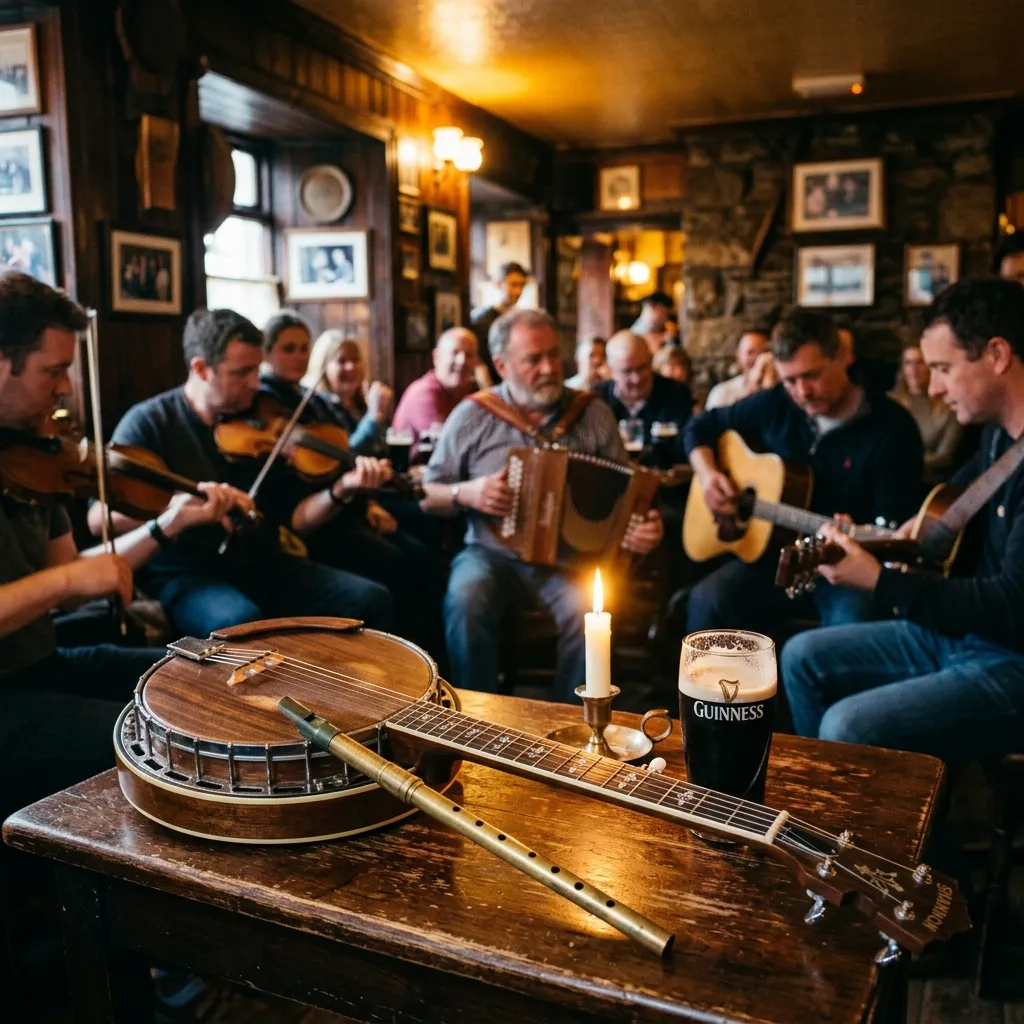
In traditional Irish music sessions, the hornpipe occupies a unique, highly respected position. Characterized by its dotted, swinging 4/4 rhythm and heavy accents on the first and third beats, the hornpipe provides a steady, driving momentum that contrasts beautifully with the rapid flow of reels and the rolling pulse of jigs.
But while hornpipes are celebrated for their solo step-dancing origins, in a session context, they are played in sets. As one tune finishes, the next must build on its energy. This requires "glue tunes"—versatile hornpipes that work in dozens of different set combinations. A great session hornpipe modulates smoothly, resolves fingering tension, and acts as a bridge between key families.
Using data from the **Trad Tune Explorer**, we analyzed thousands of tune sets and session recordings to map out the hornpipe transition network. By calculating **Degree Centrality** (the number of unique preceding and following tunes associated with each melody), we have identified the top 25 most versatile hornpipes. Whether you are looking for high-value session repertoire or trying to craft a set that flows logically, these are the tunes that connect everything.
What Makes a Hornpipe Versatile?
To database engineers, versatility is a function of graph network centrality. But to traditional musicians, versatility is about physical and musical ergonomics:
- Outgoing Transitions (Exit Versatility): How easily a tune lets the session transition into something new. A hornpipe with high exit versatility has a neutral ending note or scale position that resolves cleanly, allowing players to transition into D major, G major, or E minor.
- Incoming Transitions (Entry Versatility): How easily other tunes can lead into it. Hornpipes with high entry versatility act as open doors, resolving harmonic tension built up by more complex or obscure melodies.
- Key and Modal Adaptability: Hornpipes that occupy key family pivots (such as D major, G major, and E minor) are highly versatile. They can easily modulate up or down a step (a common technique to add lift to a set) or pivot between relative majors and minors.
- Fingering Ergonomics: A session glue tune must sit comfortably under the fingers. Repetitive, circular fingering patterns on the fiddle, tin whistle, concertina, and uilleann pipes allow musicians to maintain a steady tempo without finger trips.
The Studio vs. Session Paradox: The Locked Hornpipes
A common trap when building repertoire is confusing **popularity** (how often a tune is played) with **versatility** (how many contexts it can fit into).
Some hornpipes are incredibly popular due to a single legendary recording. For example, *The Wicklow Hornpipe* (ranked #20 in versatility) is famous worldwide and played frequently (139 transitions). However, it has a total connected count of only 71 unique tunes. Why? Because it is often locked into rigid set structures (such as pairing it with other D mixolydian tunes). It behaves as a specialist rather than a generalist.
In contrast, The Rights of Man leads the hornpipe database in unique connections (255 unique tunes, connecting with 129 distinct next tunes and 126 distinct previous tunes) even though it ranks third in overall Degree Centrality (which weights total transitions and set appearances). This pattern indicates that while The Boys of Bluehill is played more frequently in total transitions, The Rights of Man has a wider spread of distinct connections, making it a true generalist that fits into sets regardless of key or modal background.
Visualizing the Hornpipe Transition Network
Transition Network: The Boys Of Bluehill Hub
Showing the spiderweb of unique transitions branching out from the central standard to key spoke tunes.
Modal Bridge Progression
How versatile hornpipes facilitate smooth modal modulations across session sets.
Linear Set Progression Flow
Illustrating starter ? bridge ? closer set flow using actual database statistics.
The 25 Most Versatile Irish Hornpipes
Here is the complete ranking of the 25 most versatile hornpipes in the traditional archive, compiled from transition network centrality on the Trad Tune Explorer.
1. The Boys Of Bluehill
D MajorTransition Analysis: Analysis of 994 transitions across 818 sets suggests that this tune functions as a highly flexible mid-set connector. Its balanced starter rate (44.7%) and median set position of 2 indicate that musicians regularly use it throughout sets rather than reserving it for a single fixed role. Common session transitions include: Leads to: The Harvest Home (38.4%), Leads to: Off To California (19.3%). Transition Analysis: Analysis of 994 transitions across 818 sets suggests that it functions as a highly flexible mid-set connector, with a balanced starter rate of 44.7% and a median set position of 2. Common session transitions include: Leads to: The Harvest Home (38.4%), Leads to: Off To California (19.3%). Why it connects: The Boys Of Bluehill sits at the absolute center of the hornpipe repertoire. Written in D major, it features a simple, highly scalar melody that sits perfectly under the fingers of whistle, fiddle, and flute players. Its open-ended phrasing and clean resolutions make it a highly adaptable bridge to G major or E minor standards.
Common Session Pairings: Most frequently leads into The Harvest Home (D major, 38.4%) or Off To California (G major, 19.3%).
2. Off To California
G MajorTransition Analysis: Analysis of 973 transitions across 800 sets suggests that this tune functions as a highly flexible mid-set connector. Its balanced starter rate (40.4%) and median set position of 2 indicate that musicians regularly use it throughout sets rather than reserving it for a single fixed role. Common session transitions include: Leads to: The Harvest Home (15.5%), Leads to: The Rights Of Man (12.7%). Transition Analysis: Analysis of 973 transitions across 800 sets suggests that it functions as a highly flexible mid-set connector, with a balanced starter rate of 40.4% and a median set position of 2. Common session transitions include: Leads to: The Harvest Home (15.5%), Leads to: The Rights Of Man (12.7%). Why it connects: A universal standard in G major. It is known by almost every traditional musician in the world. Its high entry and exit counts (128 and 118 respectively) show its substantial generalist nature, serving as an easy resolution or lift tune in sets.
Common Session Pairings: Most frequently leads into The Harvest Home (15.5%) or The Rights Of Man (12.7%).
3. The Rights Of Man
E MinorTransition Analysis: Analysis of 966 transitions across 857 sets suggests that this tune functions as a highly flexible mid-set connector. Its balanced starter rate (44.1%) and median set position of 2 indicate that musicians regularly use it throughout sets rather than reserving it for a single fixed role. Common session transitions include: Leads to: The Pride Of Petravore (22.9%), Leads to: Off To California (11.2%). Transition Analysis: Analysis of 966 transitions across 857 sets suggests that it functions as a highly flexible mid-set connector, with a balanced starter rate of 44.1% and a median set position of 2. Common session transitions include: Leads to: The Pride Of Petravore (22.9%), Leads to: Off To California (11.2%). Why it connects: A melodic, rhythmic E minor hornpipe composed by James Hill. Because it sits in E minor but has a relative G major character in its B-part, it bridges minor and major keys seamlessly. It is the single most connected hornpipe by unique links (255 total).
Common Session Pairings: Leads into The Pride Of Petravore (22.9%) or Off To California (11.2%).
4. The Harvest Home
D MajorTransition Analysis: Analysis of 948 transitions across 761 sets suggests that this tune functions as a highly flexible mid-set connector. Its balanced starter rate (32.6%) and median set position of 2 indicate that musicians regularly use it throughout sets rather than reserving it for a single fixed role. Transition Analysis: Analysis of 948 transitions across 761 sets suggests that it functions as a highly flexible mid-set connector, with a balanced starter rate of 32.6% and a median set position of 2. Why it connects: A rhythmic D major tune characterized by its repetitive, highly rhythmic A-part arpeggios. It sits melodicly under fiddle fingers and whistle holes. It is often used to close out sets with a burst of bright, major-key energy.
5. The Home Ruler
D MajorTransition Analysis: Analysis of 436 transitions across 347 sets suggests that this tune functions as a highly flexible mid-set connector. Its balanced starter rate (46.1%) and median set position of 2 indicate that musicians regularly use it throughout sets rather than reserving it for a single fixed role. Transition Analysis: Analysis of 436 transitions across 347 sets suggests that it functions as a highly flexible mid-set connector, with a balanced starter rate of 46.1% and a median set position of 2. Why it connects: Composed by Frank McCollum, this lovely D major hornpipe has a swinging, circular melody. Its simple chordal backing makes it extremely popular in early session rounds, working as a bridge to other Sligo-style standards.
6. Red Haired Boy
AmixolydianTransition Analysis: Analysis of 452 transitions across 368 sets suggests that this tune functions as a highly flexible mid-set connector. Its balanced starter rate (40.5%) and median set position of 2 indicate that musicians regularly use it throughout sets rather than reserving it for a single fixed role. Transition Analysis: Analysis of 452 transitions across 368 sets suggests that it functions as a highly flexible mid-set connector, with a balanced starter rate of 40.5% and a median set position of 2. Why it connects: A massive crossover tune of Irish and Old-Time origin. Its A Mixolydian character (flatted seventh) gives it a bright, rustic flow that transitions naturally into D major or G major tunes.
7. The Plains Of Boyle
D MajorTransition Analysis: Analysis of 326 transitions across 282 sets suggests that this tune functions as a highly flexible mid-set connector. Its balanced starter rate (50.7%) and median set position of 1 indicate that musicians regularly use it throughout sets rather than reserving it for a single fixed role. Transition Analysis: Analysis of 326 transitions across 282 sets suggests that it functions as a highly flexible mid-set connector, with a balanced starter rate of 50.7% and a median set position of 1. Why it connects: A classic Sligo hornpipe characterized by its bouncing, syncopated intervals. It sits comfortably on all instruments and pairs melodicly with other D major standards.
8. Chief O'Neill's Favorite
D MajorTransition Analysis: Analysis of 357 transitions across 314 sets suggests that this tune functions as a highly flexible mid-set connector. Its balanced starter rate (36.6%) and median set position of 2 indicate that musicians regularly use it throughout sets rather than reserving it for a single fixed role. Transition Analysis: Analysis of 357 transitions across 314 sets suggests that it functions as a highly flexible mid-set connector, with a balanced starter rate of 36.6% and a median set position of 2. Why it connects: Associated with Chief Francis O'Neill of Chicago, this D major hornpipe has a lovely, swinging syncopation. Its open, floating structure makes it a fantastic starter or mid-set bridge.
9. The Humours Of Tullycrine
E DorianTransition Analysis: Analysis of 303 transitions across 282 sets suggests that this tune functions as a highly flexible mid-set connector. Its balanced starter rate (46.8%) and median set position of 2 indicate that musicians regularly use it throughout sets rather than reserving it for a single fixed role. Transition Analysis: Analysis of 303 transitions across 282 sets suggests that it functions as a highly flexible mid-set connector, with a balanced starter rate of 46.8% and a median set position of 2. Why it connects: A gorgeous E Dorian hornpipe from Clare style. Its modal character allows for smooth, slow-building sets that modulate into G major or D major tunes.
10. Caisleán An Óir
A DorianTransition Analysis: Analysis of 193 transitions across 188 sets suggests that this tune functions as a primary set opener. Its starter rate of 72.9% and median set position of 1 indicate that musicians predominantly use it to initiate sets rather than as a transitional bridge. Transition Analysis: Analysis of 193 transitions across 188 sets suggests a strong bias toward set-opening positions, consistent with its starter rate of 72.9% and median position of 1. Why it connects: Composed by Junior Crehan, this modal A Dorian hornpipe is beloved for its melodic modal lift. It is a popular set opener.
11. Soldier's Joy
D MajorTransition Analysis: Analysis of 284 transitions across 225 sets suggests that this tune functions as a highly flexible mid-set connector. Its balanced starter rate (32.0%) and median set position of 2 indicate that musicians regularly use it throughout sets rather than reserving it for a single fixed role. Transition Analysis: Analysis of 284 transitions across 225 sets suggests that it functions as a highly flexible mid-set connector, with a balanced starter rate of 32.0% and a median set position of 2. Why it connects: One of the oldest and most widely recorded tunes in the English-speaking world. Its simple, scalar D major runs make it a universal language tune.
12. Kitty's Wedding
D MajorTransition Analysis: Analysis of 399 transitions across 337 sets suggests that this tune functions as a dedicated set closer. Its low starter rate of 19.6% (appearing as starter in only 66 sets) and median set position of 2 suggest it is typically reserved for resolving sets. Transition Analysis: Analysis of 399 transitions across 337 sets suggests a preference for serving as a set closer, as reflected in its starter count of only 66 appearances and median position of 2. Why it connects: A classic D major hornpipe. It is a popular follow-up to *The Home Ruler*, acting as a bright resolution to the set.
13. King Of The Fairies
E MinorTransition Analysis: Analysis of 211 transitions across 222 sets suggests that this tune functions as a primary set opener. Its starter rate of 60.4% and median set position of 1 indicate that musicians predominantly use it to initiate sets rather than as a transitional bridge. Transition Analysis: Analysis of 211 transitions across 222 sets suggests a strong bias toward set-opening positions, consistent with its starter rate of 60.4% and median position of 1. Why it connects: A famous set dance in E minor. Its lyrical, modal melody carries a dark, traditional atmosphere that pairs melodicly with bright D major hornpipes.
14. Cronin's Hornpipe
G MajorTransition Analysis: Analysis of 334 transitions across 282 sets suggests that this tune functions as a highly flexible mid-set connector. Its balanced starter rate (26.2%) and median set position of 2 indicate that musicians regularly use it throughout sets rather than reserving it for a single fixed role. Transition Analysis: Analysis of 334 transitions across 282 sets suggests that it functions as a highly flexible mid-set connector, with a balanced starter rate of 26.2% and a median set position of 2. Why it connects: A classic G major hornpipe that sit melodicly on the accordion and fiddle. Its simple, stepwise runs make it a great warm-up tune.
15. The Peacock's Feather
B MinorTransition Analysis: Analysis of 176 transitions across 163 sets suggests that this tune functions as a primary set opener. Its starter rate of 67.5% and median set position of 1 indicate that musicians predominantly use it to initiate sets rather than as a transitional bridge. Transition Analysis: Analysis of 176 transitions across 163 sets suggests a strong bias toward set-opening positions, consistent with its starter rate of 67.5% and median position of 1. Why it connects: A melodic B minor hornpipe. Its dramatic minor-key rising arpeggios offer an excellent contrast to standard major-key tunes, modulating melodicly into D major.
16. The Liverpool
D MajorTransition Analysis: Analysis of 241 transitions across 198 sets suggests that this tune functions as a highly flexible mid-set connector. Its balanced starter rate (38.9%) and median set position of 2 indicate that musicians regularly use it throughout sets rather than reserving it for a single fixed role. Transition Analysis: Analysis of 241 transitions across 198 sets suggests that it functions as a highly flexible mid-set connector, with a balanced starter rate of 38.9% and a median set position of 2. Why it connects: A classic D major hornpipe characterized by its rolling, stepwise runs. Its clean structure and scalar progressions make it extremely popular in session sets.
17. Fisher's Hornpipe
D MajorTransition Analysis: Analysis of 224 transitions across 197 sets suggests that this tune functions as a highly flexible mid-set connector. Its balanced starter rate (43.1%) and median set position of 2 indicate that musicians regularly use it throughout sets rather than reserving it for a single fixed role. Transition Analysis: Analysis of 224 transitions across 197 sets suggests that it functions as a highly flexible mid-set connector, with a balanced starter rate of 43.1% and a median set position of 2. Why it connects: One of the oldest recorded hornpipes. Its clean D major structure and stepwise runs make it extremely approachable for beginners.
18. Staten Island
D MajorTransition Analysis: Analysis of 223 transitions across 178 sets suggests that this tune functions as a highly flexible mid-set connector. Its balanced starter rate (33.7%) and median set position of 2 indicate that musicians regularly use it throughout sets rather than reserving it for a single fixed role. Transition Analysis: Analysis of 223 transitions across 178 sets suggests that it functions as a highly flexible mid-set connector, with a balanced starter rate of 33.7% and a median set position of 2. Why it connects: A lovely D major hornpipe (often played as a reel). It has a highly lyrical melody that bridges melodicly into G major or E minor standards.
19. The Pride Of Petravore
E MinorTransition Analysis: Analysis of 295 transitions across 278 sets suggests that this tune functions as a highly flexible mid-set connector. Its balanced starter rate (26.6%) and median set position of 2 indicate that musicians regularly use it throughout sets rather than reserving it for a single fixed role. Transition Analysis: Analysis of 295 transitions across 278 sets suggests that it functions as a highly flexible mid-set connector, with a balanced starter rate of 26.6% and a median set position of 2. Why it connects: Also known as *Eileen Oge*, this rhythmic E minor hornpipe has a dramatic, minor-key lift. It frequently follows *The Rights Of Man* in session sets.
20. The Wicklow Hornpipe
D MixolydianTransition Analysis: Analysis of 139 transitions across 129 sets suggests that this tune functions as a primary set opener. Its starter rate of 63.6% and median set position of 1 indicate that musicians predominantly use it to initiate sets rather than as a transitional bridge. Transition Analysis: Analysis of 139 transitions across 129 sets suggests a strong bias toward set-opening positions, consistent with its starter rate of 63.6% and median position of 1. Why it connects: A classic D Mixolydian hornpipe that has a lovely rustic character. Its flatted seventh provides a great contrast to D major standards.
21. Poll Ha'penny
AmixolydianTransition Analysis: Analysis of 153 transitions across 133 sets suggests that this tune functions as a highly flexible mid-set connector. Its balanced starter rate (52.6%) and median set position of 1 indicate that musicians regularly use it throughout sets rather than reserving it for a single fixed role. Transition Analysis: Analysis of 153 transitions across 133 sets suggests that it functions as a highly flexible mid-set connector, with a balanced starter rate of 52.6% and a median set position of 1. Why it connects: A melodic long hornpipe in A Mixolydian (often played as a set dance). Its winding melody sits melodicly on uilleann pipes and fiddle.
22. Alexander's Hornpipe
D MajorTransition Analysis: Analysis of 152 transitions across 131 sets suggests that this tune functions as a highly flexible mid-set connector. Its balanced starter rate (51.1%) and median set position of 1 indicate that musicians regularly use it throughout sets rather than reserving it for a single fixed role. Transition Analysis: Analysis of 152 transitions across 131 sets suggests that it functions as a highly flexible mid-set connector, with a balanced starter rate of 51.1% and a median set position of 1. Why it connects: A classic D major hornpipe that sit melodicly on open whistle holes and fiddle strings.
23. The Stack Of Barley
A MajorTransition Analysis: Analysis of 207 transitions across 185 sets suggests that this tune functions as a highly flexible mid-set connector. Its balanced starter rate (34.1%) and median set position of 2 indicate that musicians regularly use it throughout sets rather than reserving it for a single fixed role. Transition Analysis: Analysis of 207 transitions across 185 sets suggests that it functions as a highly flexible mid-set connector, with a balanced starter rate of 34.1% and a median set position of 2. Why it connects: A classic A major hornpipe (often played with three sharps). Its bouncy, syncopated jumps are highly addictive, making it a great set-closer.
24. The Belfast Hornpipe
D MajorTransition Analysis: Analysis of 176 transitions across 165 sets suggests that this tune functions as a highly flexible mid-set connector. Its balanced starter rate (43.0%) and median set position of 2 indicate that musicians regularly use it throughout sets rather than reserving it for a single fixed role. Transition Analysis: Analysis of 176 transitions across 165 sets suggests that it functions as a highly flexible mid-set connector, with a balanced starter rate of 43.0% and a median set position of 2. Why it connects: A highly popular D major standard. Its long, flowing melody features substantial variations that offer an excellent challenge to lead instrumentalists.
25. The Wonder
D MajorTransition Analysis: Analysis of 136 transitions across 115 sets suggests that this tune functions as a highly flexible mid-set connector. Its balanced starter rate (53.9%) and median set position of 1 indicate that musicians regularly use it throughout sets rather than reserving it for a single fixed role. Transition Analysis: Analysis of 136 transitions across 115 sets suggests that it functions as a highly flexible mid-set connector, with a balanced starter rate of 53.9% and a median set position of 1. Why it connects: A famous old hornpipe. Its repetitive, circular melody has a hypnotic quality that makes it a great set-closer.
Deep-Dive Feature Callouts
*The Boys of Bluehill* sits in D major, which shares a key signature with G major and E minor. Because it occupies the very center of this key family, it acts as a massive harmonic hub. Its melody is relatively simple, focusing on scalar steps and basic triads rather than complex jumps, which makes it extremely neutral. Guitarists can lay down solid, open drones under it, and backing players can take the set in almost any direction next. This harmonic neutrality is the secret to its massive versatility score.
In almost every session in the world, if you play *The Boys of Bluehill*, you will follow it with *The Harvest Home*. Our database statistics show this transition is incredibly strong: **38.43% of the time** (211 times in sets), *The Boys of Bluehill* leads directly into *The Harvest Home*. While this is a gorgeous pairing that maintains the D major lift, it is a classic example of a strong set association. Thankfully, both tunes are so versatile that they also connect to hundreds of other tunes when players decide to break the mold.
The most surprising entry in the top 25 is **Red Haired Boy** (#6). Commonly played as a bluegrass fiddle standard, its high versatility in Irish sessions shows its incredible crossover success. Its Mixolydian structure makes it highly neutral, acting as a gateway between D major and G major hornpipes.
A great session hornpipe needs three features:
- Harmonic Neutrality: Supporting simple, open chords without forcing backing guitarists into frantic shifts.
- Ergonomic Fingering: Sitting comfortably under open holes on whistle and flute, avoiding complex cross-fingerings.
- Modal Anchoring: Starting and ending on common root notes (D, G, E) so players can easily slide in from other keys.
Frequently Asked Questions
What is a versatile hornpipe?
A hornpipe in 4/4 time with syncopated, dotted rhythms that demonstrates transition diversity. Rather than being played in a single static set, it connects with multiple preceding and following tunes across different keys, modes, and sets.
How are these rankings calculated?
Using degree centrality network graph analysis on recorded transitions from TheSession.org. Score is based on the number of distinct preceding and following tunes associated with them in sets, not absolute popularity count.
Are these the most popular hornpipes?
Not necessarily. Popularity counts absolute frequency. Versatility measures context diversity. Some popular tunes are set-locked, whereas versatile tunes act as bridge templates in multiple combinations.
Why do some hornpipes rank lower?
High absolute popularity but low transition versatility due to set-locking (exclusive pairing in a single combination, such as the Wicklow Hornpipe).
How can versatile hornpipes be used in set building?
As bridge or closer tunes. They provide transition paths between distant keys (e.g., E Minor to D Major) that are recognizable and ergonomic.
Conclusion & Repertoire Recommendations
Whether you are just starting out on your traditional music journey or are an experienced session player looking to refresh your repertoire, learning versatile hornpipes is the single most efficient way to expand your musical horizons. By mastering tunes like *The Boys Of Bluehill*, *Off To California*, *The Rights Of Man*, and *The Harvest Home*, you gain entry tickets to thousands of sessions worldwide.
We invite you to use the interactive tools of the **Trad Tune Explorer** to dig deeper into these tune networks. Search for your favorite hornpipes, explore their transition trees, and discover hidden connections that can help you compose your own perfect session sets.