Quick Facts: Jigs Transition Network
Table of Contents
- Introduction: The Pulse of the Irish Session
- What Makes a Jig Versatile? (Degree Centrality vs. Popularity)
- The Studio vs. Session Paradox: The Locked Jigs
- Visualizing the Jig Transition Network
- The 25 Most Versatile Irish Jigs
- Deep-Dive Feature Callouts
- Frequently Asked Questions
- Conclusion & Repertoire Recommendations
Introduction: The Pulse of the Irish Session
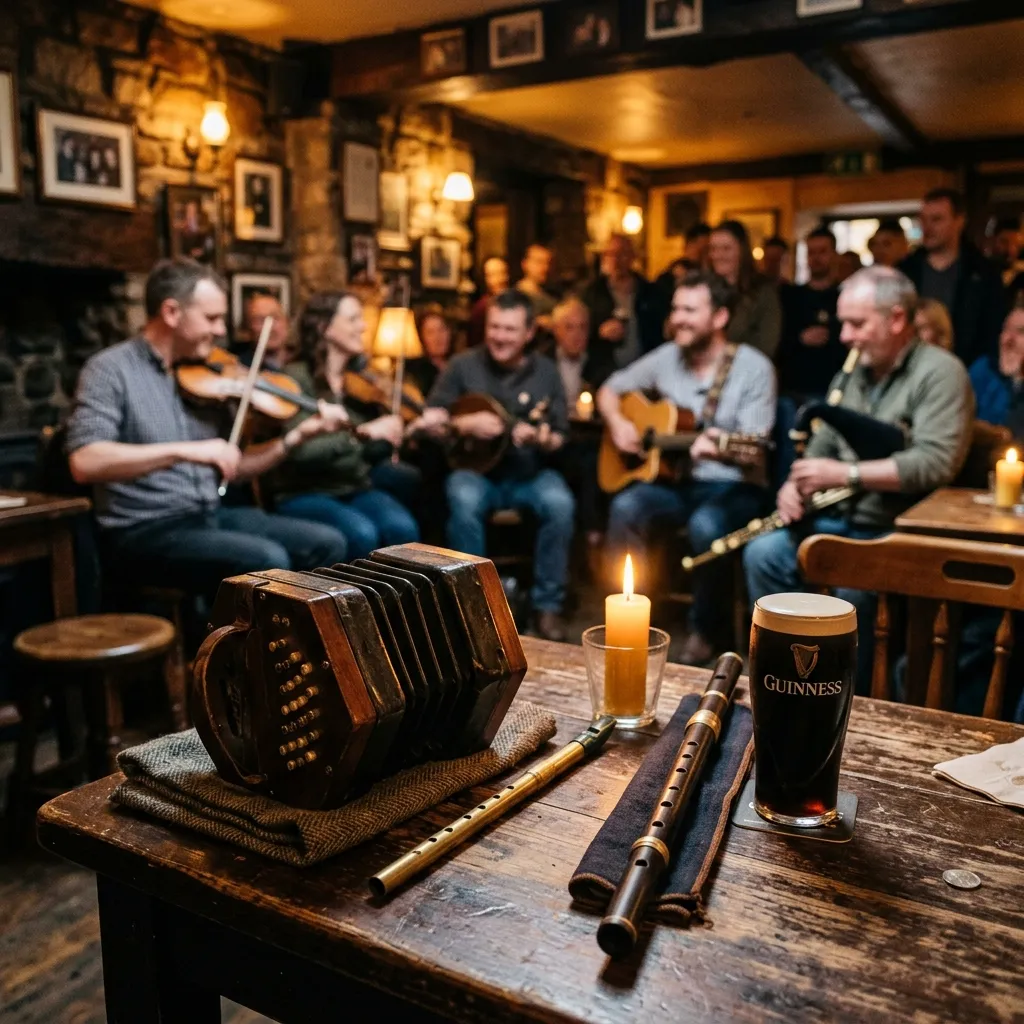
Along with reels, jigs are the absolute heartbeat of traditional Irish music. Written in 6/8 time with its characteristic "dum-da-da dum-da-da" rolling pulse, the jig is designed to make feet tap and dancers move. But while a dance performance might rely on carefully rehearsed, unyielding tune selections, a real pub session is a living, breathing creature.
In a session, sets are constructed on the fly. As one tune finishes, a lead player must quickly launch into another, pivoting between keys and maintaining the momentum. To keep the music flowing without colliding into awkward fingerings or jarring chord shifts, the tradition relies on "glue tunes"—versatile jigs that work in dozens of different set combinations.
Using data from the **Trad Tune Explorer**, we analyzed thousands of tune sets and session recordings to map out the jig transition network quantitatively. By calculating **Degree Centrality** (the number of unique preceding and following tunes associated with each melody), we have identified the top 25 most versatile jigs in the traditional archive. These are the generalist tunes that can rescue a dying set, bridge distant key centers, and link players together across the globe.
What Makes a Jig Versatile?
To database engineers, versatility is a function of graph network centrality. But to traditional musicians, versatility is about flexibility and ease. A versatile jig must satisfy several crucial musical criteria:
- Outgoing Transitions (Exit Versatility): How easily a tune lets the session move forward. A jig with high exit versatility has a neutral ending note or scale position that resolves cleanly, allowing a player to slide into G major, D major, E Dorian, or A Dorian with equal comfort.
- Incoming Transitions (Entry Versatility): How easily other tunes can lead into it. Jigs with high entry versatility act as open doorways, resolving harmonic tension built up by more obscure or complex melodies.
- Modal Adaptability: Jigs that occupy harmonic middle grounds—such as G major, A Dorian, or D mixolydian—are highly versatile. They can easily modulate up or down a step (a common technique to add lift to a set) or pivot between relative majors and minors.
- Physical Ergonomics: A session glue tune must sit comfortably under the fingers. Simple, circular fingering patterns on the fiddle, tin whistle, concertina, and uilleann pipes allow musicians of all skill levels to join in effortlessly at high speeds.
The Studio vs. Session Paradox: The Locked Jigs
A common trap when building repertoire is confusing **popularity** (how often a tune is played) with **versatility** (how many contexts it can fit into).
Some jigs are incredibly popular due to a single legendary recording. For example, *The Jig of Slurs* (ranked #28 in versatility) is famous worldwide and played frequently (634 transitions). However, it has a total connected count of only 173 unique tunes. Why? Because it is often locked into rigid set structures (such as pairing it with *The Atholl Brose* or other Scottish-style sets). It behaves as a specialist rather than a generalist.
In contrast, Out On The Ocean leads the jig database in unique connections (510 unique tunes, connecting with 259 distinct next tunes and 251 distinct previous tunes) even though it ranks first in connection diversity, while The Kesh Jig ranks first in total transitions (2,578) and set appearances (2,162). This reveals that while The Kesh has higher set-level momentum, Out On The Ocean establishes a wider set of distinct transition pathways across the tradition.
Visualizing the Jig Transition Network
Transition Network: Out On The Ocean Hub
Showing the spiderweb of unique transitions branching out from the central standard to key spoke tunes.
Modal Bridge Progression
How versatile jigs facilitate smooth modal modulations across session sets.
Linear Set Progression Flow
Illustrating starter ? bridge ? closer set flow using actual database statistics.
The 25 Most Versatile Irish Jigs
Here is the complete ranking of the 25 most versatile jigs in the traditional archive, compiled from transition network centrality on the Trad Tune Explorer.
1. Out On The Ocean
G MajorTransition Analysis: Analysis of 2,384 transitions across 1914 sets suggests that this tune functions as a highly flexible mid-set connector. Its balanced starter rate (34.3%) and median set position of 2 indicate that musicians regularly use it throughout sets rather than reserving it for a single fixed role. Common session transitions include: Leads to: The Lilting Banshee (5.2%), Leads to: The Connaughtman's Rambles (4.6%), Leads to: Tripping Up The Stairs (4.4%). Transition Analysis: Analysis of 2,384 transitions across 1914 sets suggests that it functions as a highly flexible mid-set connector, with a balanced starter rate of 34.3% and a median set position of 2. Common session transitions include: Leads to: The Lilting Banshee (5.2%), Leads to: The Connaughtman's Rambles (4.6%), Leads to: Tripping Up The Stairs (4.4%). Why it connects: Out On The Ocean is the undisputed champion of transition breadth. Though it has slightly fewer absolute transitions than The Kesh, it connects to a wider variety of unique tunes. Written in G major, its pentatonic-leaning, rolling melody sits perfectly on whistle, flute, and accordion. Its open-ended nature allows players to transition easily into D major, E Dorian, or A Dorian tunes.
Common Session Pairings: Most frequently leads into The Lilting Banshee (A Dorian, 5.2%), The Connaughtman's Rambles (E Dorian, 4.6%), or Tripping Up The Stairs (D major, 4.4%).
2. The Kesh Jig
G MajorTransition Analysis: Analysis of 2,578 transitions across 2162 sets suggests that this tune functions as a highly flexible mid-set connector. Its balanced starter rate (40.3%) and median set position of 2 indicate that musicians regularly use it throughout sets rather than reserving it for a single fixed role. Common session transitions include: Leads to: Morrison's (21.4%), Leads to: Out On The Ocean (6.7%), Leads to: The Swallowtail (5.1%). Transition Analysis: Analysis of 2,578 transitions across 2162 sets suggests that it functions as a highly flexible mid-set connector, with a balanced starter rate of 40.3% and a median set position of 2. Common session transitions include: Leads to: Morrison's (21.4%), Leads to: Out On The Ocean (6.7%), Leads to: The Swallowtail (5.1%). Why it connects: The Kesh is arguably the most famous jig in Irish music. Its simple, scalar G major structure makes it a universal session language—known by absolute beginners and seasoned veterans alike. Because it features a highly open, non-chromatic structure, it works as an easy entry point or resolution tune in almost any set.
Common Session Pairings: Leads into Morrison's (E Dorian, 21.4%) in one of the most famous session sets of all time. It also pairs frequently with Out On The Ocean (6.7%) and The Swallowtail (5.1%).
3. Morrison's Jig
E DorianTransition Analysis: Analysis of 2,205 transitions across 1761 sets suggests that this tune functions as a highly flexible mid-set connector. Its balanced starter rate (29.6%) and median set position of 2 indicate that musicians regularly use it throughout sets rather than reserving it for a single fixed role. Common session transitions include: Leads to: Drowsy Maggie (9.2%), Leads to: The Swallowtail (6.5%). Transition Analysis: Analysis of 2,205 transitions across 1761 sets suggests that it functions as a highly flexible mid-set connector, with a balanced starter rate of 29.6% and a median set position of 2. Common session transitions include: Leads to: Drowsy Maggie (9.2%), Leads to: The Swallowtail (6.5%). Why it connects: Named after Sligo fiddler James Morrison, this E Dorian standard is beloved for its energetic B-part octave leaps. It is incredibly popular as a follow-up to G major jigs, providing a lift in minor/Dorian modal coloring while sharing the same key signature (two sharps).
Common Session Pairings: Frequently follows The Kesh Jig. Leads into Drowsy Maggie (D Dorian, 9.2%) or The Swallowtail (6.5%).
4. Banish Misfortune
D MixolydianTransition Analysis: Analysis of 1,697 transitions across 1476 sets suggests that this tune functions as a highly flexible mid-set connector. Its balanced starter rate (50.3%) and median set position of 1 indicate that musicians regularly use it throughout sets rather than reserving it for a single fixed role. Transition Analysis: Analysis of 1,697 transitions across 1476 sets suggests that it functions as a highly flexible mid-set connector, with a balanced starter rate of 50.3% and a median set position of 1. Why it connects: A stunning three-part jig in D Mixolydian. The flatted seventh (C natural) gives it a modal, ancient character, but its major-sounding D triad structure keeps it bright. It functions as a perfect bridge tune when shifting from major keys to darker minor keys.
5. Calliope House
E MajorTransition Analysis: Analysis of 1,162 transitions across 1002 sets suggests that this tune functions as a highly flexible mid-set connector. Its balanced starter rate (37.5%) and median set position of 2 indicate that musicians regularly use it throughout sets rather than reserving it for a single fixed role. Transition Analysis: Analysis of 1,162 transitions across 1002 sets suggests that it functions as a highly flexible mid-set connector, with a balanced starter rate of 37.5% and a median set position of 2. Why it connects: Composed by Dave Richardson of The Boys of the Lough, this bright E major tune has massive crossover appeal. Playing in E major (four sharps) is somewhat rare in sessions, but Calliope House is so fun and bouncy that players learn it anyway. Its high versatility is driven by its function as a set opener or a high-energy key elevator.
6. The Connaughtman's Rambles
E DorianTransition Analysis: Analysis of 1,636 transitions across 1261 sets suggests that this tune functions as a highly flexible mid-set connector. Its balanced starter rate (27.9%) and median set position of 2 indicate that musicians regularly use it throughout sets rather than reserving it for a single fixed role. Transition Analysis: Analysis of 1,636 transitions across 1261 sets suggests that it functions as a highly flexible mid-set connector, with a balanced starter rate of 27.9% and a median set position of 2. Why it connects: An old standard characterized by its rolling, scalar D major/E Dorian skips. It has a high-energy B-part that sits melodicly on the fiddle, making it a reliable standard that can follow or lead almost any G or D jig.
7. The Mist Covered Mountain
A DorianTransition Analysis: Analysis of 908 transitions across 765 sets suggests that this tune functions as a highly flexible mid-set connector. Its balanced starter rate (44.3%) and median set position of 2 indicate that musicians regularly use it throughout sets rather than reserving it for a single fixed role. Transition Analysis: Analysis of 908 transitions across 765 sets suggests that it functions as a highly flexible mid-set connector, with a balanced starter rate of 44.3% and a median set position of 2. Why it connects: Composed by Junior Crehan, this gorgeous A Dorian tune has a deep, misty, Clare atmosphere. Its modal character allows for smooth, slow-building sets that modulate into G major or D major tunes.
8. The Lark In The Morning
D MajorTransition Analysis: Analysis of 946 transitions across 842 sets suggests that this tune functions as a highly flexible mid-set connector. Its balanced starter rate (41.6%) and median set position of 2 indicate that musicians regularly use it throughout sets rather than reserving it for a single fixed role. Transition Analysis: Analysis of 946 transitions across 842 sets suggests that it functions as a highly flexible mid-set connector, with a balanced starter rate of 41.6% and a median set position of 2. Why it connects: A famous four-part jig in D major. Its length and melodic variations provide a substantial, satisfying core to any set, allowing backing guitarists to build complex harmonic arrangements.
9. The Rolling Wave
D MajorTransition Analysis: Analysis of 935 transitions across 743 sets suggests that this tune functions as a highly flexible mid-set connector. Its balanced starter rate (39.4%) and median set position of 2 indicate that musicians regularly use it throughout sets rather than reserving it for a single fixed role. Transition Analysis: Analysis of 935 transitions across 743 sets suggests that it functions as a highly flexible mid-set connector, with a balanced starter rate of 39.4% and a median set position of 2. Why it connects: Also known as *The Humours of Trim*, this D major jig has a rolling, circular melody. Its simple, scalar jumps sit comfortably on open whistle holes and fiddle strings, making it a great middle-of-the-set connector.
10. The Cliffs Of Moher
A DorianTransition Analysis: Analysis of 1,307 transitions across 1040 sets suggests that this tune functions as a dedicated set closer. Its low starter rate of 20.8% (appearing as starter in only 216 sets) and median set position of 2 suggest it is typically reserved for resolving sets. Transition Analysis: Analysis of 1,307 transitions across 1040 sets suggests a preference for serving as a set closer, as reflected in its starter count of only 216 appearances and median position of 2. Why it connects: A classic double jig in A Dorian (or A minor). Its signature sliding intro and rolling rhythm make it an excellent choice to build sets. Its high entry count (185) shows that it is a common resolution point for minor-key tunes.
11. The Swallowtail Jig
A DorianTransition Analysis: Analysis of 1,388 transitions across 1112 sets suggests that this tune functions as a highly flexible mid-set connector. Its balanced starter rate (38.9%) and median set position of 2 indicate that musicians regularly use it throughout sets rather than reserving it for a single fixed role. Transition Analysis: Analysis of 1,388 transitions across 1112 sets suggests that it functions as a highly flexible mid-set connector, with a balanced starter rate of 38.9% and a median set position of 2. Why it connects: An incredibly popular A Dorian standard. Fiddlers love the open-string drones and rocking bowing patterns. Its high exit count (168) is driven by its ability to resolve melodicly into E Dorian or D major tunes.
12. The Dusty Windowsills
A DorianTransition Analysis: Analysis of 846 transitions across 694 sets suggests that this tune functions as a highly flexible mid-set connector. Its balanced starter rate (46.7%) and median set position of 2 indicate that musicians regularly use it throughout sets rather than reserving it for a single fixed role. Transition Analysis: Analysis of 846 transitions across 694 sets suggests that it functions as a highly flexible mid-set connector, with a balanced starter rate of 46.7% and a median set position of 2. Why it connects: Composed by Sean Harling, this three-part A Dorian jig has a rhythmic, syncopated flow. Its modern styling bridges the gap between old traditional regional styles and contemporary Celtic folk music.
13. The Blarney Pilgrim
G MajorTransition Analysis: Analysis of 1,473 transitions across 1201 sets suggests that this tune functions as a highly flexible mid-set connector. Its balanced starter rate (45.8%) and median set position of 2 indicate that musicians regularly use it throughout sets rather than reserving it for a single fixed role. Transition Analysis: Analysis of 1,473 transitions across 1201 sets suggests that it functions as a highly flexible mid-set connector, with a balanced starter rate of 45.8% and a median set position of 2. Why it connects: A lovely three-part G major jig. It has a highly lyrical melody that sit melodicly on the wooden flute and tin whistle. Its modal neutral B-part makes it an excellent set closer.
14. The Killavil Jig
E DorianTransition Analysis: Analysis of 745 transitions across 589 sets suggests that this tune functions as a highly flexible mid-set connector. Its balanced starter rate (39.4%) and median set position of 2 indicate that musicians regularly use it throughout sets rather than reserving it for a single fixed role. Transition Analysis: Analysis of 745 transitions across 589 sets suggests that it functions as a highly flexible mid-set connector, with a balanced starter rate of 39.4% and a median set position of 2. Why it connects: A classic E Dorian tune from Sligo. Its rolling, repetitive fingering patterns sit comfortable on all traditional instruments, making it a great mid-set energy builder.
15. Tripping Up The Stairs
D MajorTransition Analysis: Analysis of 1,163 transitions across 941 sets suggests that this tune functions as a highly flexible mid-set connector. Its balanced starter rate (33.7%) and median set position of 2 indicate that musicians regularly use it throughout sets rather than reserving it for a single fixed role. Transition Analysis: Analysis of 1,163 transitions across 941 sets suggests that it functions as a highly flexible mid-set connector, with a balanced starter rate of 33.7% and a median set position of 2. Why it connects: A bright, bouncy D major jig. Its stepwise runs and simple chordal backing make it extremely approachable for beginners while remaining satisfying for veterans.
16. I Buried My Wife And Danced On Top Of Her
D MixolydianTransition Analysis: Analysis of 822 transitions across 684 sets suggests that this tune functions as a highly flexible mid-set connector. Its balanced starter rate (50.3%) and median set position of 1 indicate that musicians regularly use it throughout sets rather than reserving it for a single fixed role. Transition Analysis: Analysis of 822 transitions across 684 sets suggests that it functions as a highly flexible mid-set connector, with a balanced starter rate of 50.3% and a median set position of 1. Why it connects: A famous old jig with a humorous title. Its Mixolydian mode (flatted seventh) gives it a bright, rustic character that modulates melodicly into G major or E Dorian.
17. The Black Rogue
A MixolydianTransition Analysis: Analysis of 700 transitions across 569 sets suggests that this tune functions as a highly flexible mid-set connector. Its balanced starter rate (36.9%) and median set position of 2 indicate that musicians regularly use it throughout sets rather than reserving it for a single fixed role. Transition Analysis: Analysis of 700 transitions across 569 sets suggests that it functions as a highly flexible mid-set connector, with a balanced starter rate of 36.9% and a median set position of 2. Why it connects: A classic jig in A Mixolydian. The drone-friendly open G string and rolling B-part octave shifts make it extremely popular among fiddle and bagpipe players.
18. The Rose In The Heather
D MajorTransition Analysis: Analysis of 800 transitions across 691 sets suggests that this tune functions as a highly flexible mid-set connector. Its balanced starter rate (49.3%) and median set position of 2 indicate that musicians regularly use it throughout sets rather than reserving it for a single fixed role. Transition Analysis: Analysis of 800 transitions across 691 sets suggests that it functions as a highly flexible mid-set connector, with a balanced starter rate of 49.3% and a median set position of 2. Why it connects: A rhythmic D major tune that often pairs with *The Lark In The Morning* or *The Rambling Pitchfork*. Its simple melody allows players to focus on ornamentation and lift.
19. The Banks Of Lough Gowna
B MinorTransition Analysis: Analysis of 454 transitions across 374 sets suggests that this tune functions as a highly flexible mid-set connector. Its balanced starter rate (40.9%) and median set position of 2 indicate that musicians regularly use it throughout sets rather than reserving it for a single fixed role. Transition Analysis: Analysis of 454 transitions across 374 sets suggests that it functions as a highly flexible mid-set connector, with a balanced starter rate of 40.9% and a median set position of 2. Why it connects: A melodic B minor jig composed by long-time standard setters. It acts as an excellent minor-key lift in sets that are otherwise heavily focused on D major.
20. The Blackthorn Stick
G MajorTransition Analysis: Analysis of 863 transitions across 701 sets suggests that this tune functions as a highly flexible mid-set connector. Its balanced starter rate (42.4%) and median set position of 2 indicate that musicians regularly use it throughout sets rather than reserving it for a single fixed role. Transition Analysis: Analysis of 863 transitions across 701 sets suggests that it functions as a highly flexible mid-set connector, with a balanced starter rate of 42.4% and a median set position of 2. Why it connects: A bouncy G major jig that sits comfortably on whistle and fiddle. Its simple, stepwise runs make it a great warm-up tune in early session rounds.
21. The Mouse In The Kitchen
A MajorTransition Analysis: Analysis of 676 transitions across 539 sets suggests that this tune functions as a dedicated set closer. Its low starter rate of 20.2% (appearing as starter in only 109 sets) and median set position of 2 suggest it is typically reserved for resolving sets. Transition Analysis: Analysis of 676 transitions across 539 sets suggests a preference for serving as a set closer, as reflected in its starter count of only 109 appearances and median position of 2. Why it connects: Composed by Colin Farrell, this contemporary A major classic has quickly spread. Its bright, bouncy character works well as an energy builder or set-closer.
22. Garrett Barry's Jig
G MajorTransition Analysis: Analysis of 768 transitions across 615 sets suggests that this tune functions as a highly flexible mid-set connector. Its balanced starter rate (42.8%) and median set position of 2 indicate that musicians regularly use it throughout sets rather than reserving it for a single fixed role. Transition Analysis: Analysis of 768 transitions across 615 sets suggests that it functions as a highly flexible mid-set connector, with a balanced starter rate of 42.8% and a median set position of 2. Why it connects: Associated with the famous blind piper Garrett Barry of Inagh, County Clare. It is often played in D mixolydian or G major, carrying a lovely, laid-back Clare swing.
23. Willie Coleman's Jig
G MajorTransition Analysis: Analysis of 710 transitions across 549 sets suggests that this tune functions as a highly flexible mid-set connector. Its balanced starter rate (40.1%) and median set position of 2 indicate that musicians regularly use it throughout sets rather than reserving it for a single fixed role. Transition Analysis: Analysis of 710 transitions across 549 sets suggests that it functions as a highly flexible mid-set connector, with a balanced starter rate of 40.1% and a median set position of 2. Why it connects: A lovely two-part G major jig associated with Sligo style. Its bouncy, rhythmic jumping intervals are incredibly fun to play, making it a great starter tune.
24. Haste To The Wedding
C MajorTransition Analysis: Analysis of 685 transitions across 544 sets suggests that this tune functions as a highly flexible mid-set connector. Its balanced starter rate (36.9%) and median set position of 2 indicate that musicians regularly use it throughout sets rather than reserving it for a single fixed role. Transition Analysis: Analysis of 685 transitions across 544 sets suggests that it functions as a highly flexible mid-set connector, with a balanced starter rate of 36.9% and a median set position of 2. Why it connects: A tune of English and Scottish crossover heritage that has become fully naturalized in the Irish tradition. Its simple, scalar C major melody is known worldwide.
25. The Geese In The Bog
A MinorTransition Analysis: Analysis of 683 transitions across 555 sets suggests that this tune functions as a highly flexible mid-set connector. Its balanced starter rate (46.7%) and median set position of 2 indicate that musicians regularly use it throughout sets rather than reserving it for a single fixed role. Transition Analysis: Analysis of 683 transitions across 555 sets suggests that it functions as a highly flexible mid-set connector, with a balanced starter rate of 46.7% and a median set position of 2. Why it connects: A classic A minor jig. Its circular, drone-friendly melody provides a modal, ancient atmosphere that bridges melodicly into bright D major or G major jigs.
Deep-Dive Feature Callouts
*Out On The Ocean* sits in G major, which shares a key signature with D major and E Dorian. Because it occupies the very center of this key family, it acts as a massive harmonic hub. Its melody is relatively simple, focusing on scalar steps and basic triads rather than complex jumps, which makes it extremely neutral. Guitarists can lay down solid, open drones under it, and backing players can take the set in almost any direction next. This harmonic neutrality is the secret to its massive 510 connected tunes score.
In almost every session in the world, if you play *The Kesh Jig*, you will follow it with *Morrison's*. Our database statistics show this transition is incredibly strong: **21.42% of the time** (281 times in sets), *The Kesh* leads directly into *Morrison's*. While this is a gorgeous pairing that resolves the G major lift into E Dorian momentum, it is a classic example of a strong set association. Thankfully, both tunes are so versatile that they also connect to hundreds of other tunes when players decide to break the mold.
The most surprising entry in the top 25 is **The Mouse In The Kitchen** (#21). Composed by Colin Farrell, it has rapidly climbed to become a session standard despite its modern origin. Another surprise is **Calliope House** (#5), which is written in E major. E major is traditionally considered a difficult key for whistles and flutes, yet the tune is so infectious and popular that it has successfully crossed over and developed 367 unique connections, proving that visual lift and danceability can overcome key signature biases.
A great session jig needs three features:
- Harmonic Neutrality: Supporting simple, open chords without forcing backing guitarists into frantic shifts.
- Ergonomic Fingering: Sitting comfortably under open holes on whistle and flute, avoiding complex cross-fingerings.
- Modal Anchoring: Starting and ending on common root notes (G, D, A) so players can easily slide in from other keys.
Frequently Asked Questions
What is a versatile jig?
A double jig in 6/8 time that demonstrates transition diversity. Rather than being played in a single static set, it connects with multiple preceding and following tunes across different keys, modes, and sets.
How are these rankings calculated?
Using degree centrality network graph analysis on recorded transitions from TheSession.org. Score is based on the number of distinct preceding and following tunes associated with them in sets, not absolute popularity count.
Are these the most popular jigs?
Not necessarily. Popularity counts absolute frequency. Versatility measures context diversity. Some popular tunes are set-locked, whereas versatile tunes act as bridge templates in multiple combinations.
Why do some jigs rank lower?
High absolute popularity but low transition versatility due to set-locking (exclusive pairing in a single combination, such as the Jig of Slurs).
How can versatile jigs be used in set building?
As bridge or closer tunes. They provide transition paths between distant keys (e.g., E Minor to D Major) that are recognizable and ergonomic.
Conclusion & Repertoire Recommendations
Whether you are just starting out on your traditional music journey or are an experienced session player looking to refresh your repertoire, learning versatile jigs is the single most efficient way to expand your musical horizons. By mastering tunes like *Out On The Ocean*, *The Kesh*, *Morrison's*, and *Banish Misfortune*, you gain entry tickets to thousands of sessions worldwide.
We invite you to use the interactive tools of the **Trad Tune Explorer** to dig deeper into these tune networks. Search for your favorite jigs, explore their transition trees, and discover hidden connections that can help you compose your own perfect session sets.