Introduction: Why Some Jigs Outlast the Rest
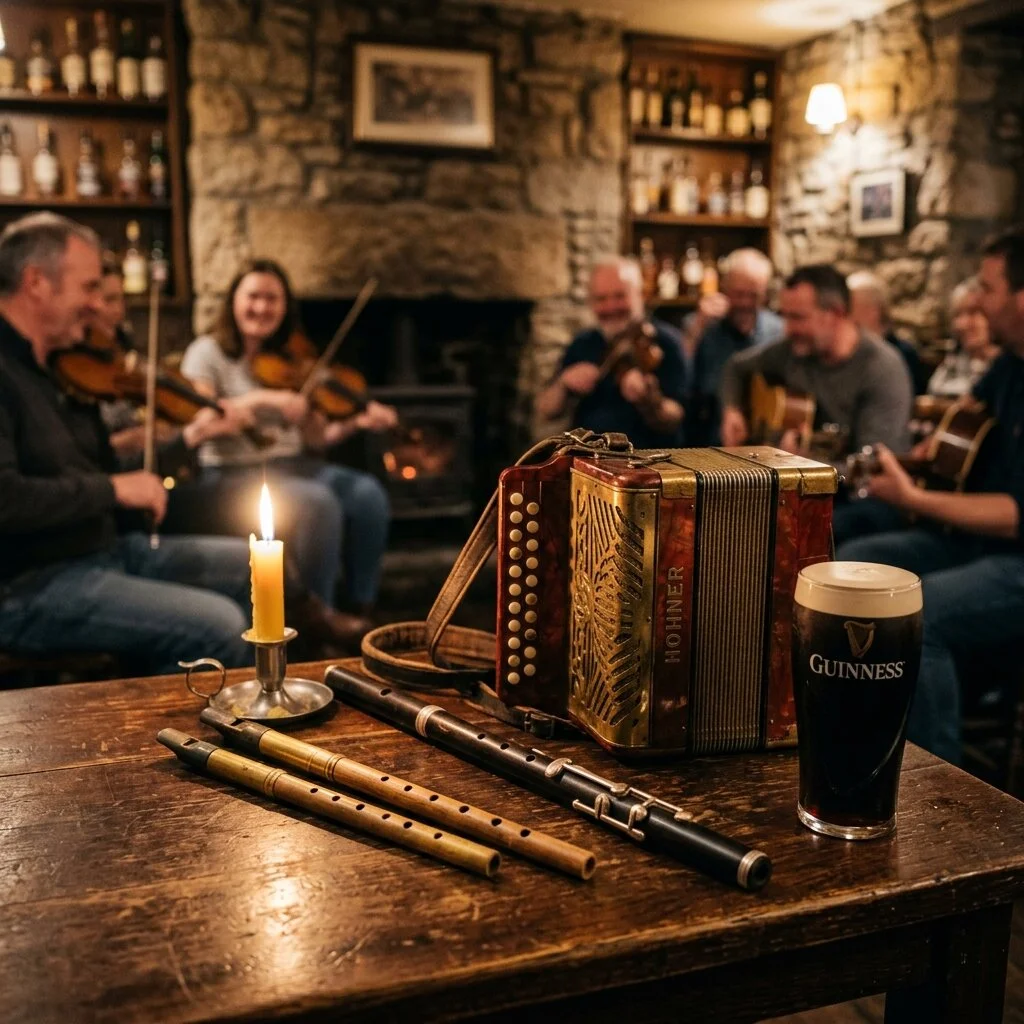
Walk into any traditional Irish session from Galway to Tokyo, and you will hear them: the infectious 6/8 bounce of a double jig. It is the rhythmic heartbeat of Irish music. But with thousands of traditional jigs documented in historic collections like O'Neill's or Ceol Rince na hÉireann, why is it that a small handful — scarcely more than a few dozen — are played in every pub session, while the rest gather dust?
Many musicians attribute this to simple habit or opinion. However, by querying the **Trad Tune Explorer database**, we can move past hearsay and look at the real figures. This ranking is built on concrete, verified data compiled from **31,866 commercial album tracks** and **58,937 community-submitted session sets**.
In this article, we rank the **25 most recorded Irish jigs of all time**, exploring the historical roots of each tune, its musical quirks, its landmark recordings, and its most common session transitions. Grab a pint, settle in, and let's explore the stats behind these session giants.
The Trad Tune Explorer database offers a massive, digitized window into the evolution of traditional music. Here is the high-level data analyzing the jigs in our repository:
- Most Recorded Jig: The Connaughtman's Rambles (221 commercial tracks)
- Most Popular Session Jig: The Kesh Jig (1,485 unique set appearances)
- Oldest Recordings Represented: Cylinder recordings of melodeon player John J. Kimmel from 1907, compiled in Early Recordings of Irish Traditional Dance Music.
Table of Contents
The 25 Most Recorded Irish Jigs
Here is the definitive ranking of the top twenty-five Irish jigs, based on the total number of commercial album tracks cataloged in the Trad Tune Explorer.
1. Connaughtman's Rambles, The
DmajorHistory: One of the most ubiquitous double jigs in the tradition. Though its origins are obscure, it has been a staple since the dawn of commercial recording. Melodeon player John J. Kimmel recorded it as 'Connaughtman's Ramble' on a cylinder in the 1900s, cementing its early popularity.
Why it became popular: It has a simple, driving contour in D major that sits perfectly on the D tin whistle, flute, and fiddle. It is highly social, played at almost every introductory session worldwide.
Musical traits: The tune features a highly recognizable A-part that jumps up and down the D major triad, while the B-part has a lovely rolling quality with a characteristic slide into the high notes.
The Bucks Of Oranmore by Joe Burke, Traditional Music Of Ireland And The Bucks Of Oranmore by Joe Burke & Charlie Lennon, Early Recordings Of Irish Traditional Dance Music by John Kimmel
Common Session Pairings:
Played after: Geese In The Bog, The (x92), Out On The Ocean (x54), Lilting Banshee, The (x41)
Played before: Out On The Ocean (x85), Kesh, The (x51), Calliope House (x39)
2. Out On The Ocean
GmajorHistory: Also known as 'The Over the Water Jig,' this G major standard is of Irish-American origin but was brought back to Ireland, where it became a Clare session favorite. It represents the sweet, rolling style of Clare music.
Why it became popular: Its moderate tempo and spacious melody make it a perfect starter tune. It lies comfortably on the fingerboards and keys of all traditional instruments.
Musical traits: A highly lyrical melody with long, flowing phrases that allow players to add subtle variations, cuts, and rolls without losing the pulse.
Happy To Meet And Sorry To Part by Joe Burke, Michael Cooney And Terry Corcoran, Live In Seattle by Martin Hayes And Dennis Cahill, Heathery Breeze by Matt Molloy
Common Session Pairings:
Played after: Rolling Wave, The (x100), Kesh, The (x87), Connaughtman's Rambles, The (x85)
Played before: Kesh, The (x97), Lilting Banshee, The (x58), Connaughtman's Rambles, The (x54)
3. Morrison's
EdorianHistory: Named after Sligo fiddle legend James Morrison, who recorded it in 1928. Morrison learned the tune from a Dublin accordionist named Tom Hennessey, who in turn got it from Munster piper Maurice Hennessey, who called it 'The Stick Across the Hob.'
Why it became popular: The tune became a massive hit after Morrison's recording, establishing itself as the go-to jig in E Dorian for fiddlers and accordionists.
Musical traits: Features a relentless, driving A-part with repeated E notes, followed by a dramatic B-part that climbs up to a high B before cascading down in a series of triplets.
Sligo Made by Kevin Burke, Two Champions by Sean McGuire And Joe Burke, Back To The Glen by Shaskeen
Common Session Pairings:
Played after: Kesh, The (x271), Swallowtail, The (x65), Butterfly, The (x49)
Played before: Kesh, The (x147), Drowsy Maggie (x88), Swallowtail, The (x61)
4. Mist Covered Mountain, The
AdorianHistory: Composed by Clare fiddle legend Junior Crehan (1908–1998) in honor of Mist-Covered Mount Callan. Junior was a master storyteller and composer, and this tune is one of his greatest gifts to the tradition.
Why it became popular: Its beautiful, haunting A Dorian melody offers a stark, modal contrast to the bright major-key jigs that dominate sessions.
Musical traits: It features a brooding, atmospheric quality. The melody utilizes the flat seventh (G natural) to create a beautiful, ancient modal tension.
Live in New York 1977 by De Dannan, The Mist Covered Mountain by De Dannan, Harmony Hill by Dervish
Common Session Pairings:
Played after: Mac's Fancy (x29), Junior Crehan's (x16), Orphan, The (x16)
Played before: Mug Of Brown Ale, The (x14),
Cliffs Of Moher, The (x12), Cat's Meow, The (x11)
5. Banish Misfortune
DmixolydianHistory: An ancient D Mixolydian jig that has been in print since the 19th century. Its title captures the essence of traditional music — using the lift of a dance tune to drive away sorrow and hardship.
Why it became popular: The tune's rolling, circular structure is incredibly hypnotic. It is a favorite for concertina and uilleann pipe players, who use its bellows-driven nature to create signature accents.
Musical traits: Features a beautiful flat-seventh (C natural) throughout. The melody rolls up and down, ending each part with a distinct modal cadence.
Casey In The Cowhouse by Bobby Casey, The Spirit Of West Clare by Bobby Casey, The Irish Concertina 3: Live in New York by Noel Hill
Common Session Pairings:
Played after: Blarney Pilgrim, The (x80), Morrison's (x40), Garrett Barry's (x33)
Played before: Blarney Pilgrim, The (x157), Cliffs Of Moher, The (x59), Out On The Ocean (x44)
6. Tatter Jack Walsh
DmixolydianHistory: A classic Clare jig in D Mixolydian. Named after a legendary character (perhaps a local dancer or musician), it has been a session staple in County Clare for generations.
Why it became popular: It has a gorgeous, bouncy lift that epitomizes the West Clare concertina style. Famous recordings by Kevin Burke and Jackie Daly popularized it globally.
Musical traits: The tune utilizes the Mixolydian mode's flat seventh to create a playful, questioning feel in the A-part, followed by a bright, satisfying resolution in the B-part.
Spirit by Dervish, A Chapter in History: 30 Years of Joe 'Banjo' Burke, Live. Volume II: Live from Eagle Tavern. by Joe Burke, Traditional Music Of Ireland by Joe Burke
Common Session Pairings:
Played after: Garrett Barry's (x26), Cook In The Kitchen, The (x9), Kerfunten, The (x8)
Played before: Cook In The Kitchen, The
(x31), Banish Misfortune (x14), Garrett Barry's (x9)
7. Frost Is All Over, The
DmajorHistory: A very old traditional jig associated with several folk songs (such as 'The praties are dug and the frost is all over'). It has been cataloged in various manuscripts since the early 1900s.
Why it became popular: Its bright, sunny D major melody has a childishly simple yet incredibly satisfying rhythm that gets everyone tapping their feet.
Musical traits: The A-part features repeating rhythmic hops, while the B-part rises to a joyful peak before resolving. It sits exceptionally well on the tin whistle and button accordion.
Galway's Own by Joe Burke, Cold Blow And The Rainy Night by Planxty, Forty Years Of Irish Piping by Seamus Ennis
Common Session Pairings:
Played after: Kitty Lie Over (x14), Apples In Winter (x12), Saddle The Pony (x12)
Played before: Gander In The Pratie Hole, The
(x17), Out On The Ocean (x10), Eavesdropper, The (x10)
8. Rambling Pitchfork, The
DmajorHistory: A classic session jig in D major, found in O'Neill's *1001 Gems* (1907). It has been a standard in Sligo and Clare repertoires for over a century.
Why it became popular: The melody has a natural, rolling flow that is very easy to pick up but leaves ample room for advanced ornamentation and variation.
Musical traits: Features beautiful rolling arpeggios in the A-part, while the B-part uses a rising scale that climbs to a high A before descending smoothly.
A Chapter in History: 30 Years of Joe 'Banjo' Burke, Live. Volume II: Live from Eagle Tavern. by Joe Burke, In Tandem by Kevin Burke And Ged Foley, Molloy, Brady, Peoples by Matt Molloy, Paul Brady, Tommy Peoples
Common Session Pairings:
Played after: Sporting Pitchfork, The (x35),
Kesh, The (x18), Black Rogue, The (x17)
Played before: Black Rogue, The (x27), Rolling Wave, The (x15), Out On The Ocean (x14)
9. Lark In The Morning, The
DmajorHistory: An ancient four-part jig (though occasionally played in three parts). It is one of the most famous pieces of descriptive music in the Irish tradition, evoking the singing of a lark at dawn.
Why it became popular: Its expansive, grand structure makes it a favorite for solo performances and ceili bands alike. It is a standard showcase piece for uilleann pipers.
Musical traits: Each of the four parts builds on the previous one, utilizing the full range of the instrument. The piping style of Seamus Ennis popularized its intricate variations.
Masters Of Irish Music by Seamus Ennis, The Bonny Bunch Of Roses by Seamus Ennis, Aggie Whyte by Aggie Whyte
Common Session Pairings:
Played after: Banish Misfortune (x28), Kesh, The (x25), Lilting Banshee, The (x17)
Played before: Donegal Lass, The (x20), Banish Misfortune (x19), Lilting Banshee, The (x18)
10. Banks Of Lough Gowna, The
BminorHistory: A beautiful B minor jig named after the scenic lake on the border of Longford and Cavan. It is a relatively modern addition to the session core but is now played globally.
Why it became popular: Its minor key gives it a dark, driving energy that flute and fiddle players love to dig into. It is a fantastic tune for building tension in a set.
Musical traits: The melody features tight, syncopated phrasing and sits comfortably on the low register of the flute and whistle. It is frequently paired with *Willie Coleman's*.
Casey In The Cowhouse by Bobby Casey, Spirit by Dervish, A Tribute To Michael Coleman by Joe Burke, Andy McGann And Felix Dolan
Common Session Pairings:
Played after: Brendan Tonra's (x6), Mist Covered Mountain, The (x6), Lark On The Strand, The (x6)
Played before: Willie Coleman's (x12), Strike The Gay Harp (x11), Mouse In The Cupboard, The (x8)
11. Cliffs Of Moher, The
AdorianHistory: An ancient A Dorian jig named after the spectacular cliffs in County Clare. It has been recorded by countless legendary Clare musicians, including concertina master Noel Hill.
Why it became popular: The tune's dramatic melodic jumps evoke the steep, craggy drop of the cliffs, making it a thrilling tune to play in a crowded pub.
Musical traits: The A-part features a steep rising phrase that drops off suddenly, while the B-part has a lovely, rolling minor-key resolution.
BBC Archive Recordings by Bobby Casey, If The Cap Fits by Kevin Burke, Suite by Kevin Burke And Cal Scott
Common Session Pairings:
Played after: Dusty Windowsills, The (x75), Banish Misfortune (x59), Lilting Banshee, The (x34)
Played before: Connaughtman's Rambles, The
(x41), Rose In The Heather, The (x37), Banish Misfortune (x22)
12. Kesh, The
GmajorHistory: Famously recorded by Planxty on their landmark 1973 debut album, opening their first set. Named after the village of Kesh in County Fermanagh, it is perhaps the most famous Irish jig in the world.
Why it became popular: Its bright, straightforward G major melody is the first jig almost every beginner learns. It has an infectious cheerfulness that defines the pub session sound.
Musical traits: The tune is characterized by simple, repeating scalar patterns in G major that flow naturally on whistles, flutes, fiddles, and banjos.
Time For A Tune by Charlie Lennon, Lucky In Love by Charlie Lennon And Mick O'Connor, Two Champions by Sean McGuire And Joe Burke
Common Session Pairings:
Played after: Morrison's (x147), Out On The Ocean (x97), Blarney Pilgrim, The (x90)
Played before: Morrison's (x271), Out On The Ocean (x87), Swallowtail, The (x63)
13. Monaghan, The
EminorHistory: A great four-part jig in E minor. It is one of the oldest jigs in the tradition, appearing in Levey's *Dance Music of Ireland* (1858).
Why it became popular: Its complex, multi-part structure provides a welcome challenge for intermediate and advanced players, offering a canvas for varied ornamentation.
Musical traits: Features a dark, rolling E minor theme. Mary Bergin's tin whistle recording on *Feadóga Stáin* is the definitive reference, showcasing its dramatic octave jumps.
Wonderwaltz by De Dannan, Feadóga Stáin by Mary Bergin, Back To The Island by Matt Molloy
Common Session Pairings:
Played after: Kesh, The (x35), Morrison's (x11), Banish Misfortune (x10)
Played before: Morrison's (x46), Kid On The Mountain, The (x10), Julia Delaney (x10)
14. Rose In The Heather, The
DmajorHistory: A sweet, lyrical D major jig of Munster origin. It was popularized by Sligo and Clare musicians in the mid-20th century and is now a global session standard.
Why it became popular: Its melody is incredibly sweet and flows with a relaxed, danceable tempo that fits perfectly into the middle of a jig set.
Musical traits: The tune features a highly melodic A-part with rolling leaps, followed by a B-part that steps down gently, creating a warm, comforting atmosphere.
Kitty Hayes Remembered by Kitty Hayes, They'll Be Good Yet by Kitty Hayes And Peter Laban, My Love Is In America by Shaskeen
Common Session Pairings:
Played after: Cliffs Of Moher, The (x37), Willie Coleman's (x13), I Buried My Wife And Danced On Top Of Her
(x13)
Played before: Aaron's Key (x46), Rambler, The (x21), Cliffs Of Moher, The (x20)
15. Garrett Barry's
GmajorHistory: Named after Garrett Barry (1847–1898), the legendary blind uilleann piper from Inagh, County Clare. Barry was a crucial link in the transmission of Clare music, and this jig is his most famous legacy.
Why it became popular: It has a distinct Clare 'lift' and a slightly modal feel (often played in G major with a Mixolydian or Dorian coloring) that makes it incredibly groove-oriented.
Musical traits: Characterized by rolling triplet phrases and a rhythmic swing that pipers and concertina players ornament with tight cuts and rolls.
A Chapter in History: 30 Years of Joe 'Banjo' Burke, Live. Volume II: Live from Eagle Tavern. by Joe Burke, Eavesdropper by Kevin Burke And Jackie Daly, The Celtic Fiddle Festival by Kevin Burke, Johnny Cunningham, Christian Lemaitre
Common Session Pairings:
Played after: Banish Misfortune (x35), Blarney Pilgrim, The (x12), Battering Ram, The (x12)
Played before: Banish Misfortune (x33), Tatter Jack Walsh (x26), Hag's Purse, The (x16)
16. Hag With The Money, The
DmixolydianHistory: A lively D Mixolydian jig made famous by Donegal supergroup Altan on their 1992 album *Harvest Storm*. It is often associated with the folklore of a hoarding witch.
Why it became popular: It has a fierce, driving Donegal energy. It is short, punchy, and incredibly satisfying to play at high speed.
Musical traits: Features a highly repetitive, rhythmic A-part and a bouncy, syncopated B-part that relies on strong accents on the offbeat.
Harvest Storm by Altan, Once Again (1987-1993) by Altan, The Morning Mist by Joe Burke, Charlie Lennon
Common Session Pairings:
Played after: Sadhbh Ni Bhruinneallaigh
(x10), Gander In The Pratie Hole, The (x7)
Played before: Hag At The Churn, The (x8), Whiskey — Roudelum (x7), Kerfunten, The (x6)
17. Frieze Breeches, The
DmajorHistory: An ancient six-part double jig in D major, sometimes called 'The Friar's Breeches.' It is one of the longest and most complex jigs in the tradition, documented in O'Neill's *1850*.
Why it became popular: A true showpiece for virtuoso players. Planxty's recording on *The Planxty Collection* set the bar for how this tune can build tension over its six distinct parts.
Musical traits: It moves through a series of melodic variations, alternating between driving scalar runs and syncopated arpeggios that test a player's breath and bow control.
Turning The Tune by Charlie Lennon, The Bucks Of Oranmore by Joe Burke, The Planxty Collection by Planxty
Common Session Pairings:
Played after: None recorded
Played before: Lark In The Morning, The (x14)
18. Scatter The Mud
AdorianHistory: A driving A Dorian jig that has been popular in both Ireland and Scotland for generations. It is a favorite among banjo and fiddle players for its fast, rhythmic fingerings.
Why it became popular: It has a fantastic, syncopated groove. Lúnasa's modern acoustic arrangement on their debut album brought it to a new generation of players.
Musical traits: The melody features a punchy, low-register A-part and a climbing B-part that creates a wonderful sense of forward momentum.
Time For A Tune by Charlie Lennon, Portland by Kevin Burke And Mícheál Ó Domhnaill, Lúnasa by Lúnasa
Common Session Pairings:
Played after: Market Town, The (x33), Willie Coleman's (x12), Mist Covered Mountain, The (x9)
Played before: Waterbed, The (x7), Tripping Up The Stairs (x6), Cuil Aodha, The (x6)
19. Black Rogue, The
AmixolydianHistory: A bright, bouncy jig in A Mixolydian (though sometimes played in D major with an A-centered feel). It has been in the tradition since the 19th century.
Why it became popular: Its infectious flat-seventh modal accents give it a lovely rustic, old-time session feel. It is a favorite for button accordionists.
Musical traits: Features repeated rhythmic leaps to the high A, accented by the G natural flat-seventh, giving the tune a cheerful, tongue-in-cheek character.
Spirit by Dervish, Happy To Meet And Sorry To Part by Joe Burke, Michael Cooney And Terry Corcoran, The Butterfly by Martin Hayes and Brooklyn Rider
Common Session Pairings:
Played after: Hardiman's Fancy (x48), Rambling Pitchfork, The (x27), I Buried My Wife And Danced On Top Of Her
(x13)
Played before: Whelan's (x22), Rambling Pitchfork, The (x17), Na Ceannabhain Bhana (x15)
20. Geese In The Bog, The
AminorHistory: A lovely, rolling double jig in A minor (or C major, depending on the setting). It is a very old melody with deep roots in the Irish piping tradition.
Why it became popular: It sits beautifully on the fiddle and pipes. Matt Molloy, Seán Keane, and Liam O'Flynn's recording on *The Fire Aflame* popularized it as a session classic.
Musical traits: Characterized by a simple, hypnotic A-part that moves around the A minor triad, followed by a bright, open B-part that rises to a high C.
Sligo Made by Kevin Burke, The Fire Aflame by Matt Molloy, Seán Keane, Liam O'Flynn, An Fhidil, Sraith 2 by Sean Keane, Kevin Burke, Paddy Glackin And Seamus Creagh
Common Session Pairings:
Played after: Battering Ram, The (x26), Connaughtman's Rambles, The (x20), Kesh, The (x10)
Played before: Connaughtman's Rambles, The
(x92), Lilting Banshee, The (x19), Pipe On The Hob, The (x11)
21. Pipe On The Hob, The
AdorianHistory: A classic three-part jig in A Dorian (there is also a two-part version in D major, but the three-part A Dorian tune is the most recorded). It is a classic uilleann piping tune.
Why it became popular: The modal, circular nature of the three parts creates a brilliant showcase for drones and regulators on the pipes.
Musical traits: Features a hypnotic, winding melody that moves through Dorian and Mixolydian inflections, with a complex B-part and a rolling C-part.
Taking Flight by Bobby Casey, A Tribute To Andy McGann by Joe Burke, Brian Conway And Felix Dolan, The Pound Ridge Sessions by Kevin Burke and John Brennan
Common Session Pairings:
Played after: Pipe On The Hob, The (x25), Geese In The Bog, The (x11), Green Fields Of Woodford, The (x8)
Played before: Hag At The Churn, The (x71),
Pipe On The Hob, The (x15), Banish Misfortune (x8)
22. Willie Coleman's
GmajorHistory: Named after Sligo fiddler Willie Coleman, who popularized it in the mid-20th century. It has since become one of the most popular G major jigs in the world.
Why it became popular: It has a very happy, bouncy character. The fingerings are extremely intuitive and comfortable, making it a favorite for all melody instruments.
Musical traits: The tune is notable for its rolling arpeggios in G major and a lovely descending scale in the B-part that resolves with a bouncy leap.
Traditional Music Of Ireland And The Bucks Of Oranmore by Joe Burke & Charlie Lennon, In Good Company - The Very Best Of by Kevin Burke, Portland by Kevin Burke And Mícheál Ó Domhnaill
Common Session Pairings:
Played after: Kitty Lie Over (x41), McGoldrick's (x20), Banks Of Lough Gowna, The (x12)
Played before: Up In The Air (x31), Pull The Knife And Stick It Again (x26), Funky Spider, The (x18)
23. Battering Ram, The
GmajorHistory: A classic session jig in G major, first published in Levey's *Dance Music of Ireland* in 1858. It has been a standard in ceili bands for over a century.
Why it became popular: Its simple, robust G major melody has a massive sound when played by a large session group. The Chieftains recorded it on their early albums, cementing its fame.
Musical traits: Features a steady, hammering rhythm with repeated notes in the A-part, followed by a soaring B-part and C-part that roll off the fingers easily.
Out Of The Ashes by John Carty & Matt Molloy, Shaskeen Irish Pub Session by Shaskeen, The Chieftains by The Chieftains
Common Session Pairings:
Played after: Banish Misfortune (x11), Blarney Pilgrim, The (x11), Garrett Barry's (x9)
Played before: Geese In The Bog, The (x26), Garrett Barry's (x12), Banish Misfortune (x9)
24. Irish Washerwoman, The
GmajorHistory: The most famous jig in the world, though often dismissed by session purists as overplayed. It actually has deep historical roots, appearing in John Playford's *The Dancing Master* in 1651.
Why it became popular: Its melody is globally recognized and represents the stereotypical 'Irish jig' in popular culture. When played well with proper lift, it is a formidable dance tune.
Musical traits: Characterized by a highly repetitive A-part based on G major arpeggios, and a driving B-part that climbs up the scale. It requires crisp ornamentation to avoid sounding mechanical.
Kilkelly by Mick Moloney, Robbie O'Connell, Jimmy Keane, Paddy Carty, Paddy Fahey, Paddy Kelly & Frank Connolly by Paddy Carty, Paddy Fahey, Paddy Kelly & Frank Connolly, Another Measure: Scottish Country Dance Music From The 1950's, Volume 2 by Adam Rennie And His Scottish Country Dance Quartet
Common Session Pairings:
Played after: Swallowtail, The (x34), Kesh, The (x26), Jig Of Slurs, The (x23)
Played before: Swallowtail, The (x23), Atholl Highlanders, The (x19), Jig Of Slurs, The (x19)
25. Humours Of Glendart, The
DmajorHistory: A bright, cheerful D major jig that is extremely popular in Clare and Galway. Also known as 'East at Glendart,' it has been a session staple for over a century.
Why it became popular: It is one of the first jigs taught to whistle and fiddle beginners because its fingerings are simple and it has an instantly recognizable, happy shape.
Musical traits: Features a bouncy, scalar A-part and a B-part that leaps to the high F# and E, resolving with a satisfying, rhythmic roll.
Songs, Jigs, Reels by Glenside And Kilfenora Céilí Bands, After The Break by Planxty, Between the Jigs and Reels: A Retrospective by Planxty
Common Session Pairings:
Played after: Hardiman's Fancy (x17), Lilting Banshee, The (x14), Saddle The Pony (x10)
Played before: Saddle The Pony (x109), Brian O'Lynn (x35), Leitrim Fancy, The (x24)
What Makes a Jig Become a Session Favourite?
Looking at the dataset as a whole, clear musical patterns emerge. The primary factor in a jig's longevity is **instrumental ergonomics**.
Our analysis of the **5,967 jigs** in the database shows that the key signatures of **D major (26.50%)** and **G major (25.98%)** combined account for **52.48%** of the entire database. This is no accident. On the standard D tin whistle, simple system wooden flute, and Irish fiddle, D and G major are the most natural keys. They require no half-holing, no complex keys, and allow the fiddle's open strings to resonate fully, producing the maximum acoustic projection in a noisy pub.
Interestingly, in the top 25 jigs, this major-key dominance is even more pronounced: **7 are in D major** and **6 are in G major** (accounting for 52% of the top rankings). The remaining slots are filled by modal keys — **A Dorian (4)**, **D Mixolydian (3)**, and **E Dorian (1)** — which are also highly finger-friendly on traditional instruments while introducing the flattened seventh tones that give Irish traditional music its signature rustic, ancient feel.
| Key / Mode | Jigs Count | Database % | Presence in Top 25 |
|---|---|---|---|
| D Major | 1,581 | 26.50% | 7 jigs (28%) |
| G Major | 1,550 | 25.98% | 6 jigs (24%) |
| A Major | 447 | 7.49% | 0 jigs (0%) |
| E Minor | 355 | 5.95% | 1 jig (4%) | A Dorian | 283 | 4.74% | 4 jigs (16%) |
| B Minor | 254 | 4.26% | 1 jig (4%) | E Dorian | 217 | 3.64% | 1 jig (4%) |
| A Minor | 216 | 3.62% | 1 jig (4%) |
| A Mixolydian | 212 | 3.55% | 1 jig (4%) | D Mixolydian | 206 | 3.45% | 3 jigs (12%) |
Surprising Discoveries: The Studio vs. Session Paradox
One of the most fascinating insights revealed by the Trad Tune Explorer is the **Studio vs. Session Paradox**. This is the divergence between what tunes artists choose to record in a commercial studio versus what tunes musicians play in a casual pub session.
Take **The Kesh Jig (ID: 55)**. In terms of session popularity, it is the absolute **#1 most popular jig in the world**, appearing in a staggering **1,485 session sets**. But on commercial recordings, it ranks only **#12 with 136 recordings**. Why? For recording artists, *The Kesh* is often viewed as too simple or overplayed — a 'beginner's tune.' Yet, its simplicity is precisely why it remains the universal king of the live session.
Conversely, look at **The Connaughtman's Rambles (ID: 19)**. It ranks **#1 in commercial recordings with 221 tracks**, yet it is **#3 in sessions (948 sets)**. *The Connaughtman's* strikes a perfect balance: its energetic arpeggios make it a brilliant showcase piece for recording artists (including early melodeon pioneer John Kimmel and Planxty), yet it remains accessible enough for session play.
Another hidden gem is **Tatter Jack Walsh (ID: 1638)**. It ranks **#6 in commercial recordings with 146 tracks**, but has a relatively modest **268 session sets**. This indicates a tune that is highly favored by recording artists (particularly Clare-influenced accordionists) who love its rhythmic nuances, even if it is less commonly played in general pub circles.
If You're Learning Irish Music: 5 Essential Jigs to Know
If you are just starting your journey in Irish traditional music, learning these five jigs will give you a solid foundation and ensure you can join in at almost any session:
- The Kesh Jig (G Major): The ultimate session starter. It is bright, cheerful, and universally known. If you can only play one jig, make it this one.
- Out On The Ocean (G Major): A beautifully relaxed Clare jig. It teaches you how to control your tempo and add subtle rhythmic variations.
- The Connaughtman's Rambles (D Major): High-energy and incredibly fun. It will build your speed and agility on D-major fingerings.
- Morrison's Jig (E Dorian): Introduces you to the Dorian mode and features Sligo-style triplet runs that are crucial for developing ornaments.
- Banish Misfortune (D Mixolydian): A masterpiece of modal music. It will train your ears to hear flat-seventh intervals and teach you how to maintain a rolling, circular rhythm.
Frequently Asked Questions
What is the most popular Irish jig?
While The Connaughtman's Rambles has the most commercial recordings (221), The Kesh Jig is the most popular jig in live sessions, appearing in 1,485 unique set lists.
Which jig should beginners learn first?
We highly recommend starting with The Kesh Jig. Its melody consists of basic scale movements in G major, which sit naturally on tin whistles, flutes, fiddles, and accordions, making it very accessible.
Which jig has the most recordings?
The Connaughtman's Rambles is the most recorded jig in our database with 221 commercial track listings by 190 unique artists, including Planxty, Joe Burke, and John Kimmel.
Why are some jigs played everywhere?
The most popular jigs are usually written in finger-friendly keys (like D major and G major), feature strong melodic hooks that are easy to remember, and have been popularized on influential recordings by groups like Planxty or The Bothy Band.
Conclusion: Exploring the Tradition
Ranking and analyzing these jigs highlights the rich, organic nature of the Irish traditional music archive. Every time you play one of these tunes, you are participating in a lineage that stretches back through Sligo fiddle masters, blind Clare pipers, and Irish-American recording pioneers.
But don't stop here. While these 25 jigs are the most recorded, there are thousands of hidden gems waiting to be discovered in the Trad Tune Explorer database. Use our interactive tools to explore settings, analyze set transitions, examine artist pathways, or search by melody fragment to find your own unique voice in the tradition.