Introduction: The Majestic Lift of the Hornpipe
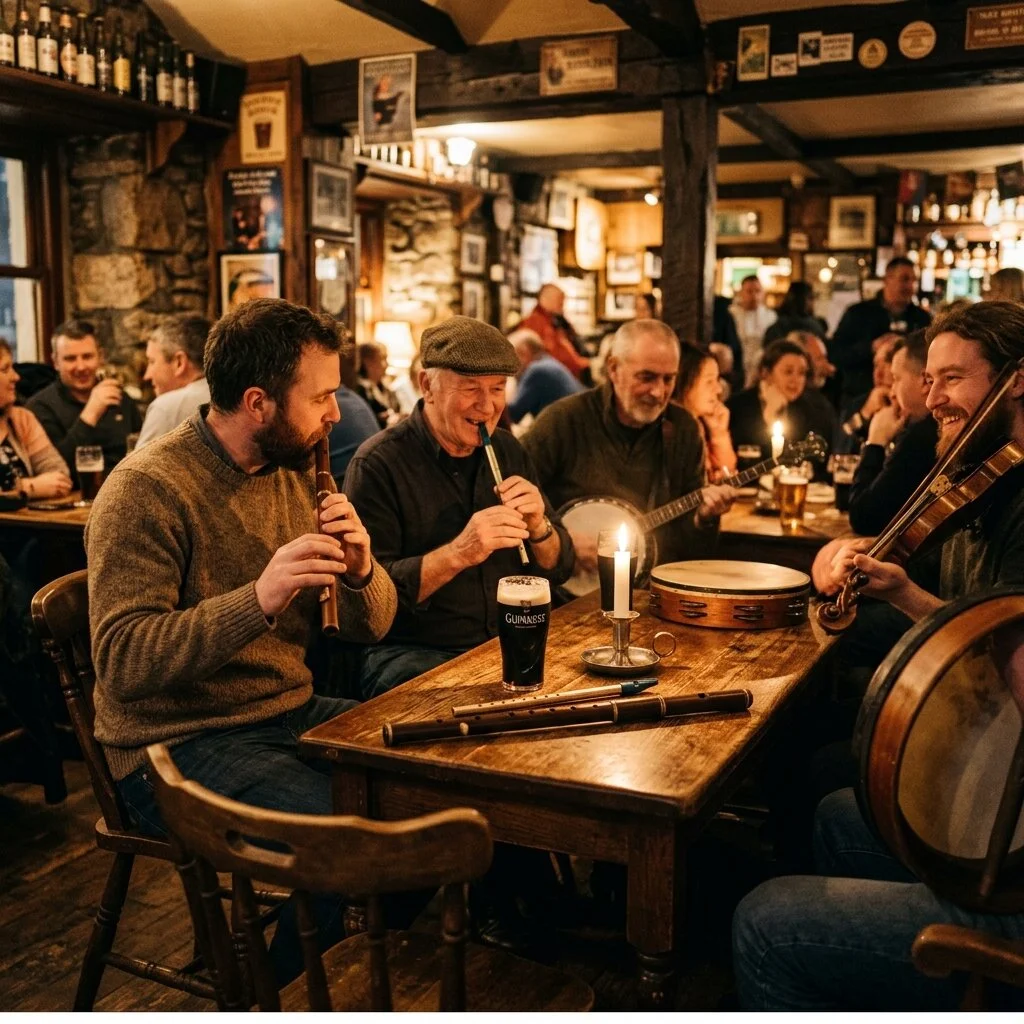
In the traditional Irish music canon, the hornpipe holds a unique status. While reels and jigs are played at high velocity with an even or flowing pulse, the hornpipe requires a majestic, syncopated lilt. Its dotted eighth-note rhythms, heavy accentuation on the first and third beats, and characteristic "three-tap" ending give it a stately, driving momentum. Walk into a pub session, and you'll likely hear standards like The Rights of Man, The Harvest Home, or The Plains of Boyle played to a room of tapping toes.
Yet, just like other traditional rhythms, the active session repertoire represents only a fraction of the archive. Many of the most beautiful, intricate hornpipes compose a list of "hidden gems." These are tunes that have been meticulously arranged and recorded by master musicians on landmark albums, but for various reasons, have failed to migrate into common session circles.
Using the quantitative power of the **Trad Tune Explorer**, we analyzed commercial album tracks, user bookmarks, and session set frequencies to identify 10 outstanding, underrated hornpipes. These melodies offer exceptional syncopations, beautiful modal changes, and satisfying fingerings, making them prime candidates for session players looking to breathe new life into their sets.
Our analytics engine calculates a **Hidden Gem Score** by comparing two opposing signals: professional studio adoption (quality signal) against live session set frequency (exposure signal). A high score indicates a tune of proven aesthetic value that remains underplayed.
- Top Hidden Gem: Spellan's Inspiration (12 commercial recordings, 0 session sets, 0 bookmarks)
- Most Recorded with No Bookmarks: Bantry, The (14 commercial recordings, 0 bookmarks)
- Donegal Masterclass: The Atlantic Roar (composed by Vincent Campbell, recorded by Bríd Harper)
Table of Contents
What is a Hidden Gem?
In plain terms, a "Hidden Gem" is a tune that shows a significant imbalance between its professional recording history and its modern community adoption. These are not obscure, unplayable tunes scribbled in the margins of a dusty 19th-century manuscript. Rather, they are high-quality, fully realized melodies that have been chosen, arranged, and recorded by professional recording artists on commercial albums.
A tune becomes a hidden gem when it has been vetted and performed by elite musicians, yet fails to transition into the common repertoire of the casual session circle. It represents an untapped resource — a melody of proven aesthetic quality that is ripe for rediscovery and study by session musicians looking to expand their repertoire.
How We Measured This
Rather than relying on subjective opinions about which hornpipes are "underrated," this analysis uses the quantitative analytics engine of the **Trad Tune Explorer**. We calculated a composite score for each tune by comparing two opposing signals:
- The Quality Signal (Commercial Footprint): This is derived from the total count of commercial album tracks, the number of distinct artists who have recorded the tune, and its appearance in historical and modern tunebooks.
- The Exposure Signal (Community Adoption): This is measured by the number of active user bookmarks on the site and the frequency of the tune's appearance in community-submitted session sets.
By subtracting the exposure signal from the quality signal, we identify tunes with a massive gap between professional appreciation and community practice. A high hidden gem score highlights tunes that have been recorded dozens of times but are played in almost zero sessions.
Visualizing the Hidden Gem Paradox
& Artists
User Bookmarks
Tunes with this profile score the highest on our index, highlighting them as major candidates for session revival.
Top 10 Hidden Gem Hornpipes
Below is the complete dataset of the 10 hidden gem hornpipes identified by the Trad Tune Explorer, ordered by their Hidden Gem Score.
1. Spellan's Inspiration
CdorianStatistical Summary: Recorded 12 times by 8 artists, but appears in only 0 bookmarks and 0 session sets. Evidence Level: medium.
Analysis: Named after or composed by the legendary 19th-century concertina player Spellan, this hornpipe is written in C dorian (a flat key mode with two flats: B-flat and E-flat). Its flat signatures require altered fingerings and half-holing on simple-system D flutes and tin whistles, which explains its complete absence from live pub session sets.
However, its physical ergonomics on the fiddle and concertina are outstanding. Fiddle virtuoso Sean McGuire's recording stands as a masterclass of clean ornamentation and classical-level precision. For flat-key players or groups with keyed instruments, this tune provides a gorgeous, refreshing shift in color.
2. Bantry, The
GmajorStatistical Summary: Recorded 14 times by 12 artists, but appears in only 0 bookmarks and 2 session sets. Evidence Level: medium.
Analysis: A lively G major hornpipe with a lovely syncopated lilt. It is frequently confused with the popular "Bantry Bay" hornpipe. Although recorded by historical figures like uilleann piping legend Seamus Ennis and accordion master Joe Burke, the tune has failed to settle into common session rotations.
It features standard, comfortable fingerings but demands precise rhythmic control. Its driving lilt makes it a wonderful addition to sets, and learning it offers a great opportunity to explore the historical recordings of the legendary Seamus Ennis.
3. Miss Wharton Duff
CdorianStatistical Summary: Recorded 11 times by 9 artists, but appears in only 0 bookmarks and 0 session sets. Evidence Level: medium.
Analysis: Originally a Scottish tune (sometimes categorized as a reel), Miss Wharton Duff is written in C dorian. Cape Breton fiddle royalty Natalie MacMaster popularized this tune on her seminal album My Roots Are Showing.
Its distinct Scottish syncopations (often utilizing the Scotch snap) and flat-key shifts have kept it primarily in the domain of Scottish and Cape Breton fiddlers, leaving it underrated in mainstream Irish sessions. However, when played on the fiddle, the tune has a highly energetic, rhythmic drive that is incredibly satisfying.
4. Fiddler's Contest, The
GmajorStatistical Summary: Recorded 15 times by 14 artists, but appears in only 3 bookmarks and 0 session sets. Evidence Level: medium.
Analysis: A bright G major hornpipe that requires active, crisp double-stops and fast triplets. Recorded by accordion legend Joe Burke on The Bucks Of Oranmore and flutist Joanie Madden on Pride Of New York, its high artistic pedigree is well documented.
However, its technical demands (living up to its title "The Fiddler's Contest") make it more of a performance showcase piece than an easy, casual session jam, explaining its zero recorded session sets. Fiddlers and accordionists who master its phrasing will find it to be an impressive addition to their repertoire.
5. Bridge Of Athlone, The
GmajorStatistical Summary: Recorded 10 times by 10 artists, but appears in only 2 bookmarks and 0 session sets. Evidence Level: medium.
Analysis: Strongly associated with the famous traditional Irish ceilidh dance of the same name, this G major tune has a strong, driving, march-like rhythm. It was recorded by the legendary button accordion virtuoso Joe Derrane on his album Return To Inis Mor.
Because of its heavy association with formal set dancing, session players often bypass it, overlooking its driving potential as a standalone concert piece. Its solid melody lies naturally on the accordion and whistle, offering a bouncy, highly danceable lift.
6. Ryan's
BminorStatistical Summary: Recorded 10 times by 10 artists, but appears in only 3 bookmarks and 0 session sets. Evidence Level: medium.
Analysis: A dark, moody hornpipe in B minor. In traditional Irish music, B minor (the relative minor of D major) has a haunting, evocative quality. Recorded by uilleann piper Cillian Vallely and David Doocey on their stellar album The Yew & The Orchard, the minor key creates a beautiful contrast to bright major sets.
However, the minor key fingerings (particularly hitting low F-sharp and C-sharp at a slow hornpipe pace) can feel awkward on simple-system flutes, making it a rare gem in casual session environments. Its atmospheric flow is highly rewarding for intermediate and advanced players.
7. Sailor's
AmajorStatistical Summary: Recorded 11 times by 11 artists, but appears in only 4 bookmarks and 0 session sets. Evidence Level: medium.
Analysis: A bright, maritime A major hornpipe. A major is a favorite key for fiddlers because it allows the use of open strings for resonance and fast finger patterns, but flutists and tin whistle players find the three sharps (F#, C#, G#) difficult on keyless instruments.
Recorded by the supergroup Celtic Fiddle Festival (comprising Kevin Burke, Christian Lemaître, and André Brunet), it has a sparkling, salt-spray character. While it remains rare in mixed sessions, it is a magnificent fiddle showpiece that is well worth learning.
8. Atlantic Roar, The
GmajorStatistical Summary: Recorded 20 times by 16 artists, but appears in only 0 bookmarks and 7 session sets. Evidence Level: strong.
Analysis: Composed by the Donegal fiddler Vincent Campbell, The Atlantic Roar is a majestic, rolling G major hornpipe. It has a strong commercial footprint with 20 recordings, including a definitive version by Donegal fiddle master Bríd Harper on her self-titled album.
Despite its high quality and strong Donegal pedigree, it has had relatively low penetration in general session sets outside of Donegal circles, making it a true regional treasure. Its sweeping melodic lines perfectly mimic the roll of the sea, providing a majestic and driving lift.
9. Ashley's
GmajorStatistical Summary: Recorded 11 times by 11 artists, but appears in only 1 bookmarks and 1 session sets. Evidence Level: medium.
Analysis: Originally a late 18th-century English hornpipe, Ashley's has been adapted into the traditional Irish repertoire. It has a stately, classical feel. Recorded by English fiddle educator Pete Cooper on English Fiddle Tunes, its crossover status and distinct English rhythmic phrasing explain why it is rarely heard in standard Irish pub sessions.
However, its stately progression and clear, melodic steps make it very easy to pick up, and it serves as a wonderful bridge for sets that cross regional boundaries.
10. Gypsy, The
GmajorStatistical Summary: Recorded 17 times by 15 artists, but appears in only 0 bookmarks and 5 session sets. Evidence Level: medium.
Analysis: A rolling, highly rhythmic G major hornpipe. It was recorded by the legendary ensemble Buttons & Bows on their classic album The First Month of Summer. It has excellent tunebook numbers (51), indicating that many players know of it, yet it is rarely called in live sessions.
The tune flows beautifully and is very ergonomic on all instruments, making it one of the easiest hidden gems to introduce to your local group. Its standard major fingering makes it instantly accessible.
Common Patterns in the Data
Analyzing the statistics of these 10 hidden gem hornpipes reveals several recurring patterns:
- Flat Keys and Modal Shift: Flat-key modes like Spellan's Inspiration and Miss Wharton Duff in C dorian (two flats) are challenging for simple-system D flutes but gorgeous on fiddle/concertina, leading to lower live exposure.
- Fiddlers' Key Selections: Sailor's in A major (three sharps) is highly ergonomic for fiddlers using open strings for resonance and fast finger patterns, but difficult for keyless woodwinds.
- Donegal Fiddle Pedigree: Donegal-composed tunes like Vincent Campbell's Atlantic Roar are celebrated locally by virtuosos like Bríd Harper but remain rare in general pub sets.
Why Hidden Gems Matter
Expanding your repertoire with underrated tunes is a fantastic way to prevent session fatigue. By playing these high-quality but underplayed hornpipes, you can bring fresh textures, modes (like C dorian or B minor), and syncopations to your local session, encouraging other players to explore the vast corners of the traditional archive.
Frequently Asked Questions
What is a hidden gem Irish hornpipe?
It is a tune that has a strong commercial recording history (recorded multiple times by professional artists) but is rarely bookmarked by users or played in modern session sets, making it a perfect candidate for revival.
Why are some great hornpipes underrated?
Many great hornpipes remain obscure due to awkward key signatures (like F major or C dorian requiring half-holing on keyless D wooden flutes), regional style isolation (e.g. Scottish or Cape Breton specialties), or because they are viewed as specialized showpieces rather than shared session standards.
Where can I find settings and sheet music?
You can click on the title of any hornpipe card above to access the tune setting page on the Trad Tune Explorer.
Conclusion
The quiet corners of the traditional archive hold melodies that deserve a place in every session circle. We hope this data-backed guide encourages you to explore these 10 hidden gem hornpipes and introduce them to your fellow session musicians.