Quick Facts: Reels Transition Network
Table of Contents
- Introduction: The Glue of the Session
- What Makes a Tune Versatile? (Degree Centrality vs. Popularity)
- The Studio vs. Session Paradox: The Tarbolton Set
- Visualizing the Session Transition Network
- The 25 Most Versatile Irish Reels
- Deep-Dive Feature Callouts
- Frequently Asked Questions
- Conclusion & Repertoire Recommendations
Introduction: The Glue of the Session
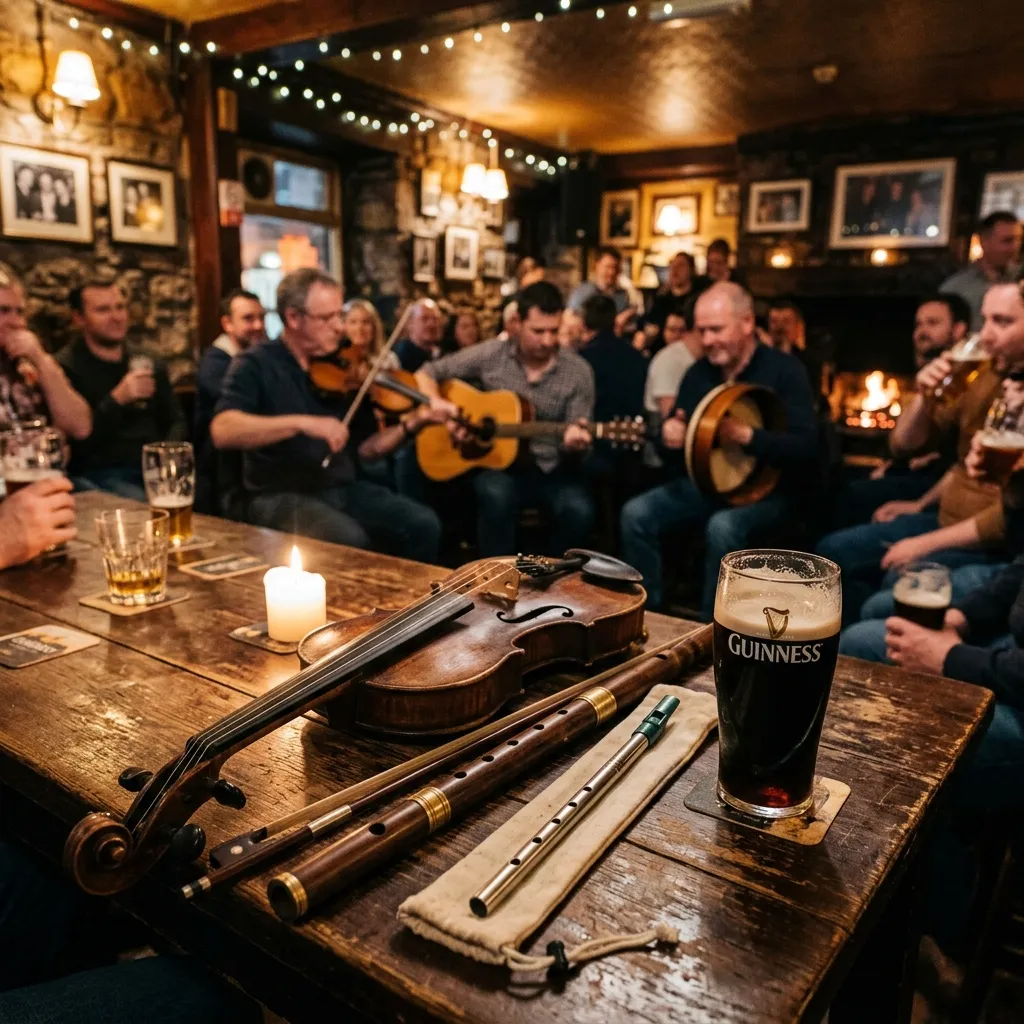
If you spend enough time sitting in Irish traditional music sessions, you will quickly notice a phenomenon. Certain tunes seem to pop up everywhere. You are playing a set in E Dorian, someone needs a transition, and suddenly you've slipped into Cooley's Reel. You are playing in G major, the energy flags, and someone launches into The Banshee. These aren't just common tunes; they are the connective tissue of the tradition—the "glue tunes" that bridge keys, soothe awkward transitions, and keep the session flow going.
In traditional music, sets are rarely static. While some groups learn fixed sets from commercial recordings, session playing is inherently fluid. Musicians combine tunes on the fly. To make these spontaneous changes work, the repertoire relies on highly adaptable, flexible melodies. A great glue tune works in dozens of combinations. It follows a wide range of tunes and can lead into just as many, resolving fingerings and key changes smoothly.
Using data from the **Trad Tune Explorer**, we analyzed hundreds of thousands of recorded tune transitions to map this network quantitatively. Rather than counting absolute popularity, we focused on transition diversity. By examining the degree of unique incoming and outgoing connections, we have identified the top 25 most versatile reels in the traditional repertoire. Whether you are a beginner looking for high-value repertoire, or a veteran bandleader designing sets that flow, these are the tunes that connect everything.
What Makes a Tune Versatile?
In database terms, versatility is mapped using network graph metrics, specifically **Degree Centrality**. When a musician plays one tune after another, they create a directed edge in a transition network. By compiling thousands of these edges, we can measure how many distinct nodes (tunes) connect to any single tune. To avoid dry technical database language, we can translate these metrics into core musical concepts:
- Outgoing Transitions (Distinct Next Tunes): This represents a tune's exit versatility. It measures how many different tunes can follow it. A high count means the tune resolves cleanly, allowing players to transition into multiple keys and fingerings.
- Incoming Transitions (Distinct Previous Tunes): This measures entry versatility—how many different tunes can lead into it. A high count means the tune is an easy target to resolve to from other keys, offering an open doorway from minor, major, or modal contexts.
- Total Connected Tunes (Transition Breadth): The sum of unique next and previous tunes. This is the ultimate indicator of a tune's integration within the session network.
- Key and Modal Adaptability: Musically, the most versatile tunes occupy a middle ground. They often feature neutral harmonic structures (such as E Dorian, A Dorian, or D mixolydian) that can easily modulate up or down a step or pivot between relative majors and minors (like G major and E minor).
- Fingering Ergonomics: A versatile tune must be physically easy to launch on a variety of traditional instruments. Melodies that sit comfortably on fiddle strings, open tin whistle fingerings, and simple button accordion systems will naturally find more crossover appeal.
The Studio vs. Session Paradox: The Tarbolton Set
It is critical to distinguish between **popularity** and **versatility**. A popular tune is one that is played frequently. A versatile tune is one that is played in a wide variety of contexts. The difference is beautifully illustrated by the famous **Tarbolton Set**: The Tarbolton ? The Longford Collector ? The Sailor's Bonnet.
This set is arguably the most famous reel combination in Irish music, popularized by the Bothy Band in the 1970s. Because of this legacy, The Longford Collector (ranked #24 on our list) is incredibly popular, appearing in 785 session transitions. However, it has a total connected count of only 59 tunes, and only **23 distinct next tunes**. Why? Because it is "set-locked." Almost every time a musician plays The Longford Collector, they precede it with The Tarbolton and follow it with The Sailor's Bonnet. It is popular, but mathematically it is a specialist, not a generalist.
Contrast this with Cooley's Reel (ranked #1). Cooley's has 2,783 total transitions, connecting with **462 different tunes** (222 distinct next tunes and 240 distinct previous tunes). Cooley's is a true generalist. It can be paired with almost anything. This is the essence of versatility: a versatile tune is a structural bridge, whereas a popular but set-locked tune is a fixed destination.
Visualizing the Session Transition Network
Transition Network: Cooley’s Reel Hub
Showing the spiderweb of unique transitions branching out from the central standard to key spoke tunes.
Modal Bridge Progression
How versatile reels facilitate smooth modal modulations across session sets.
Linear Set Progression Flow
Illustrating starter ? bridge ? closer set flow using actual database statistics.
The 25 Most Versatile Irish Reels
Here is the complete ranking of the 25 most versatile reels in the traditional archive, compiled from transition network centrality on the Trad Tune Explorer.
1. Cooley's Reel
E DorianTransition Analysis: Analysis of 2,783 transitions across 2180 sets suggests that this tune functions as a highly flexible mid-set connector. Its balanced starter rate (42.8%) and median set position of 2 indicate that musicians regularly use it throughout sets rather than reserving it for a single fixed role. Common session transitions include: Leads to: The Wise Maid (18.5%), Leads to: Drowsy Maggie (11%), Leads to: The Maid Behind The Bar (8%). Transition Analysis: Analysis of 2,783 transitions across 2180 sets suggests that it functions as a highly flexible mid-set connector, with a balanced starter rate of 42.8% and a median set position of 2. Common session transitions include: Leads to: The Wise Maid (18.5%), Leads to: Drowsy Maggie (11%), Leads to: The Maid Behind The Bar (8%). Why it connects: Cooley's sits at the absolute center of the reel network. Written in E Dorian, it is incredibly friendly to button accordions (the B/C system) and provides an open, robust drone on fiddle and pipes. Because it starts on a solid E minor chord but resolves with a bright, major-like A part transition, it acts as a perfect gateway between minor and major keys.
Common Session Pairings: Most frequently leads into The Wise Maid (D major, 18.5%), Drowsy Maggie (D Dorian, 11%), or The Maid Behind The Bar (D major, 8%). It is frequently preceded by jigs modulating into reels, or E minor reels like The Earl's Chair.
2. Drowsy Maggie
D DorianTransition Analysis: Analysis of 2,089 transitions across 1761 sets suggests that this tune functions as a highly flexible mid-set connector. Its balanced starter rate (39.0%) and median set position of 2 indicate that musicians regularly use it throughout sets rather than reserving it for a single fixed role. Common session transitions include: Leads to: The Maid Behind The Bar (5.1%), Leads to: The Mountain Road (4.0%), Leads to: Toss The Feathers (3.3%). Transition Analysis: Analysis of 2,089 transitions across 1761 sets suggests that it functions as a highly flexible mid-set connector, with a balanced starter rate of 39.0% and a median set position of 2. Common session transitions include: Leads to: The Maid Behind The Bar (5.1%), Leads to: The Mountain Road (4.0%), Leads to: Toss The Feathers (3.3%). Why it connects: Known for its rhythmic, open-string drone on the fiddle, Drowsy Maggie is typically played in E Dorian, though historical settings exist in D Dorian and E Aeolian. The repetitive A-part gives the backing player extreme harmonic freedom, meaning it can lead into almost any D major or G major reel without clashing.
Common Session Pairings: Its most popular exit transitions are into The Maid Behind The Bar (D major, 5.1%), The Mountain Road (D major, 4.0%), or Toss The Feathers (D Dorian, 3.3%). It is a popular follow-up to Cooley's Reel.
3. The Silver Spear
D MajorTransition Analysis: Analysis of 1,989 transitions across 1618 sets suggests that this tune functions as a highly flexible mid-set connector. Its balanced starter rate (39.1%) and median set position of 2 indicate that musicians regularly use it throughout sets rather than reserving it for a single fixed role. Common session transitions include: Leads to: The Earl’s Chair (10.2%), Leads to: The Maid Behind The Bar (6.1%), Leads to: The Sally Gardens (5.7%). Transition Analysis: Analysis of 1,989 transitions across 1618 sets suggests that it functions as a highly flexible mid-set connector, with a balanced starter rate of 39.1% and a median set position of 2. Common session transitions include: Leads to: The Earl's Chair (10.2%), Leads to: The Maid Behind The Bar (6.1%), Leads to: The Sally Gardens (5.7%). Why it connects: The Silver Spear is the ultimate D major session starter. Its melody is built on simple arpeggios that sit perfectly under the fingers of whistle and flute players. It has a bright, neutral quality that makes it an excellent bridge between darker Dorian tunes and rhythmic major-key classics.
Common Session Pairings: Slipped most commonly into The Earl's Chair (D major, 10.2%), The Maid Behind The Bar (D major, 6.1%), or The Sally Gardens (G major, 5.7%).
4. The Maid Behind The Bar
D MajorTransition Analysis: Analysis of 1,721 transitions across 1407 sets suggests that this tune functions as a highly flexible mid-set connector. Its balanced starter rate (40.9%) and median set position of 2 indicate that musicians regularly use it throughout sets rather than reserving it for a single fixed role. Common session transitions include: Leads to: The Banshee (5.3%), Leads to: The Sally Gardens (5.3%), Leads to: The Wind That Shakes The Barley (4.9%). Transition Analysis: Analysis of 1,721 transitions across 1407 sets suggests that it functions as a highly flexible mid-set connector, with a balanced starter rate of 40.9% and a median set position of 2. Common session transitions include: Leads to: The Banshee (5.3%), Leads to: The Sally Gardens (5.3%), Leads to: The Wind That Shakes The Barley (4.9%). Why it connects: Also known as The Green Mountain, this classic Clare reel features a rolling, syncopated B part that can easily absorb modulations from G major, D major, and E minor. It sits comfortably on all instruments and acts as a common destination to resolve long, winding sets.
Common Session Pairings: Leads into The Banshee (G major, 5.3%), The Sally Gardens (G major, 5.3%), or The Wind That Shakes The Barley (D major, 4.9%).
5. The Banshee
G MajorTransition Analysis: Analysis of 1,867 transitions across 1401 sets suggests that this tune functions as a highly flexible mid-set connector. Its balanced starter rate (28.8%) and median set position of 2 indicate that musicians regularly use it throughout sets rather than reserving it for a single fixed role. Common session transitions include: Leads to: The Sailor's Bonnet (16.9%), Leads to: The Silver Spear (6.5%), Leads to: The Maid Behind The Bar (4.2%). Transition Analysis: Analysis of 1,867 transitions across 1401 sets suggests that it functions as a highly flexible mid-set connector, with a balanced starter rate of 28.8% and a median set position of 2. Common session transitions include: Leads to: The Sailor's Bonnet (16.9%), Leads to: The Silver Spear (6.5%), Leads to: The Maid Behind The Bar (4.2%). Why it connects: Composed by McMahon, this tune is highly distinct for its descending flute-friendly phrases in the G major scale. It carries a light, airy texture that contrasts melodicly with denser D major fingerings, making it a great pallet cleanser inside a long set.
Common Session Pairings: Transitions brilliantly into The Sailor's Bonnet (D major, 16.9%), The Silver Spear (D major, 6.5%), or The Maid Behind The Bar (D major, 4.2%).
6. The Mountain Road
D MajorTransition Analysis: Analysis of 1,451 transitions across 1078 sets suggests that this tune functions as a highly flexible mid-set connector. Its balanced starter rate (30.2%) and median set position of 2 indicate that musicians regularly use it throughout sets rather than reserving it for a single fixed role. Transition Analysis: Analysis of 1,451 transitions across 1078 sets suggests that it functions as a highly flexible mid-set connector, with a balanced starter rate of 30.2% and a median set position of 2. Why it connects: Michael Coleman's famous recording established this Sligo classic as a session staple. It has a rolling A-part and a highly repetitive structure that makes it extremely easy to pick up. It acts as a great starter or bridge tune, especially when moving between G and D keys.
7. The Sally Gardens
G MajorTransition Analysis: Analysis of 1,309 transitions across 1053 sets suggests that this tune functions as a highly flexible mid-set connector. Its balanced starter rate (37.5%) and median set position of 2 indicate that musicians regularly use it throughout sets rather than reserving it for a single fixed role. Transition Analysis: Analysis of 1,309 transitions across 1053 sets suggests that it functions as a highly flexible mid-set connector, with a balanced starter rate of 37.5% and a median set position of 2. Why it connects: A bright G major tune that shares its name with the famous poetic song. Its versatility comes from its diatonic clarity. It doesn't feature any tricky accidentals or modal shifts, making it an easy target to resolve to from almost any E minor or D major reel.
8. Father Kelly's
G MajorTransition Analysis: Analysis of 1,100 transitions across 875 sets suggests that this tune functions as a highly flexible mid-set connector. Its balanced starter rate (47.3%) and median set position of 2 indicate that musicians regularly use it throughout sets rather than reserving it for a single fixed role. Transition Analysis: Analysis of 1,100 transitions across 875 sets suggests that it functions as a highly flexible mid-set connector, with a balanced starter rate of 47.3% and a median set position of 2. Why it connects: Composed by Father P.J. Kelly, this tune's bright G major character and flowing, scalar melody make it a session standard. It features a smooth, singable melody that doesn't push the instrument limits, making it a reliable choice to connect sets.
9. The Musical Priest
B MinorTransition Analysis: Analysis of 1,256 transitions across 1011 sets suggests that this tune functions as a highly flexible mid-set connector. Its balanced starter rate (34.4%) and median set position of 2 indicate that musicians regularly use it throughout sets rather than reserving it for a single fixed role. Transition Analysis: Analysis of 1,256 transitions across 1011 sets suggests that it functions as a highly flexible mid-set connector, with a balanced starter rate of 34.4% and a median set position of 2. Why it connects: A stunning three-part reel in B minor. Its dramatic minor-key rising Arpeggios offer an excellent contrast to standard major-key tunes. Its versatility is driven by its ability to modulate melodicly into D major, particularly when followed by tunes like The Silver Spear.
10. The Merry Blacksmith
D MajorTransition Analysis: Analysis of 1,148 transitions across 909 sets suggests that this tune functions as a highly flexible mid-set connector. Its balanced starter rate (38.1%) and median set position of 2 indicate that musicians regularly use it throughout sets rather than reserving it for a single fixed role. Transition Analysis: Analysis of 1,148 transitions across 909 sets suggests that it functions as a highly flexible mid-set connector, with a balanced starter rate of 38.1% and a median set position of 2. Why it connects: Sometimes called Paddy on the Railroad, this rhythmic D major tune sits comfortably on whistle, flute, and fiddle. Its simple, repetitive fingering patterns make it an excellent high-energy filler.
11. The Wind That Shakes The Barley
D MajorTransition Analysis: Analysis of 1,135 transitions across 911 sets suggests that this tune functions as a highly flexible mid-set connector. Its balanced starter rate (32.7%) and median set position of 2 indicate that musicians regularly use it throughout sets rather than reserving it for a single fixed role. Transition Analysis: Analysis of 1,135 transitions across 911 sets suggests that it functions as a highly flexible mid-set connector, with a balanced starter rate of 32.7% and a median set position of 2. Why it connects: A classic fiddle showpiece characterized by its rapid string-crossing runs. Despite its speed, it is harmonically simple, working well after major key builders or acting as a high-octane set closer.
12. The Cup Of Tea
E DorianTransition Analysis: Analysis of 1,110 transitions across 842 sets suggests that this tune functions as a highly flexible mid-set connector. Its balanced starter rate (30.3%) and median set position of 2 indicate that musicians regularly use it throughout sets rather than reserving it for a single fixed role. Transition Analysis: Analysis of 1,110 transitions across 842 sets suggests that it functions as a highly flexible mid-set connector, with a balanced starter rate of 30.3% and a median set position of 2. Why it connects: With its signature syncopated roll on the high E and its winding modal shifts, this tune connects naturally with D major and G major. It's particularly famous for leading into The Wise Maid, which resolves the Dorian tension into bright D major.
13. The Tarbolton
G MajorTransition Analysis: Analysis of 704 transitions across 639 sets suggests that this tune functions as a primary set opener. Its starter rate of 70.3% and median set position of 1 indicate that musicians predominantly use it to initiate sets rather than as a transitional bridge. Transition Analysis: Analysis of 704 transitions across 639 sets suggests a strong bias toward set-opening positions, consistent with its starter rate of 70.3% and median position of 1. Why it connects: A melodic G major/E minor tune that acts as the starting point for the famous Tarbolton Set. It features a lyrical, swinging melody that sits melodicly on the flute. Its connectivity is slightly lower than other top tunes because of its strong association with that single set, but it remains a crucial session gateway.
14. The Earl's Chair
D MajorTransition Analysis: Analysis of 1,161 transitions across 881 sets suggests that this tune functions as a dedicated set closer. Its low starter rate of 24.3% (appearing as starter in only 214 sets) and median set position of 2 suggest it is typically reserved for resolving sets. Transition Analysis: Analysis of 1,161 transitions across 881 sets suggests a preference for serving as a set closer, as reflected in its starter count of only 214 appearances and median position of 2. Why it connects: Composed by Pakie Duignan, this tune features a melodic shift between B minor tension and D major resolutions. Its open, floating structure makes it a fantastic starter or mid-set bridge, sitting comfortably on all melody instruments.
15. The Congress
D MixolydianTransition Analysis: Analysis of 967 transitions across 784 sets suggests that this tune functions as a highly flexible mid-set connector. Its balanced starter rate (35.5%) and median set position of 2 indicate that musicians regularly use it throughout sets rather than reserving it for a single fixed role. Transition Analysis: Analysis of 967 transitions across 784 sets suggests that it functions as a highly flexible mid-set connector, with a balanced starter rate of 35.5% and a median set position of 2. Why it connects: A classic modal reel written in D Mixolydian (though often played with an A minor/Dorian flavor). Its flatted seventh gives it a dark, old-style character that transitions naturally into brighter D major or G major tunes.
16. The Wise Maid
D MajorTransition Analysis: Analysis of 1,175 transitions across 932 sets suggests that this tune functions as a dedicated set closer. Its low starter rate of 22.4% (appearing as starter in only 209 sets) and median set position of 2 suggest it is typically reserved for resolving sets. Transition Analysis: Analysis of 1,175 transitions across 932 sets suggests a preference for serving as a set closer, as reflected in its starter count of only 209 appearances and median position of 2. Why it connects: Composed by Johnny Harling, this bright D major melody features sweeping arpeggios that mimic classical violin patterns. It is a popular follow-up to Cooley's Reel, acting as a bright resolution to the E Dorian tension.
17. Miss McLeod's
G MajorTransition Analysis: Analysis of 916 transitions across 736 sets suggests that this tune functions as a highly flexible mid-set connector. Its balanced starter rate (33.8%) and median set position of 2 indicate that musicians regularly use it throughout sets rather than reserving it for a single fixed role. Transition Analysis: Analysis of 916 transitions across 736 sets suggests that it functions as a highly flexible mid-set connector, with a balanced starter rate of 33.8% and a median set position of 2. Why it connects: A historically massive tune of Scottish origin that crossed over into Irish, Old-Time, and Bluegrass traditions. Its simple, scale-based G major runs make it a universal language tune, played by musicians of all styles and backgrounds.
18. Spootiskerry
G MajorTransition Analysis: Analysis of 684 transitions across 551 sets suggests that this tune functions as a highly flexible mid-set connector. Its balanced starter rate (49.2%) and median set position of 2 indicate that musicians regularly use it throughout sets rather than reserving it for a single fixed role. Transition Analysis: Analysis of 684 transitions across 551 sets suggests that it functions as a highly flexible mid-set connector, with a balanced starter rate of 49.2% and a median set position of 2. Why it connects: Composed by Shetland fiddler Ian Burns, this modern G major classic has spread like wildfire. Its bouncy, syncopated rhythm is exceptionally fun to play, making it a great contemporary set addition.
19. Tam Lin
D MinorTransition Analysis: Analysis of 850 transitions across 835 sets suggests that this tune functions as a highly flexible mid-set connector. Its balanced starter rate (39.5%) and median set position of 2 indicate that musicians regularly use it throughout sets rather than reserving it for a single fixed role. Transition Analysis: Analysis of 850 transitions across 835 sets suggests that it functions as a highly flexible mid-set connector, with a balanced starter rate of 39.5% and a median set position of 2. Why it connects: Also known as The Glasgow Reel, this rhythmic D minor (natural minor/Aeolian) tune composed by Davey Arthur has a hypnotic, dark groove. Its minor-key tension resolved into major-key follow-ons provides a massive boost of energy to session sets.
20. St. Anne's Reel
D MajorTransition Analysis: Analysis of 910 transitions across 765 sets suggests that this tune functions as a highly flexible mid-set connector. Its balanced starter rate (31.0%) and median set position of 2 indicate that musicians regularly use it throughout sets rather than reserving it for a single fixed role. Transition Analysis: Analysis of 910 transitions across 765 sets suggests that it functions as a highly flexible mid-set connector, with a balanced starter rate of 31.0% and a median set position of 2. Why it connects: A French-Canadian/Acadian tune that has become fully naturalized in the Irish tradition. Its clean, classical-sounding D major structure and stepwise runs make it extremely approachable for beginners while remaining satisfying for veterans.
21. MacLeod's Farewell
G MajorTransition Analysis: Analysis of 595 transitions across 511 sets suggests that this tune functions as a primary set opener. Its starter rate of 61.4% and median set position of 1 indicate that musicians predominantly use it to initiate sets rather than as a transitional bridge. Transition Analysis: Analysis of 595 transitions across 511 sets suggests a strong bias toward set-opening positions, consistent with its starter rate of 61.4% and median position of 1. Why it connects: Composed by Donald Shaw of Capercaillie, this bright G major reel has an infectious, rhythmic flow. Its modern styling sits melodicly on flutes and fiddles, bridging the gap between old-style regional tunes and modern Celtic folk-rock.
22. Sporting Paddy
G MajorTransition Analysis: Analysis of 775 transitions across 594 sets suggests that this tune functions as a highly flexible mid-set connector. Its balanced starter rate (35.0%) and median set position of 2 indicate that musicians regularly use it throughout sets rather than reserving it for a single fixed role. Transition Analysis: Analysis of 775 transitions across 594 sets suggests that it functions as a highly flexible mid-set connector, with a balanced starter rate of 35.0% and a median set position of 2. Why it connects: Usually played in A Dorian or G major, this tune features a rolling, repetitive fingering system that flutists love. Its modal ambiguity (hovering between G major and A minor) makes it a great pivot point to switch key families mid-set.
23. Castle Kelly
A MinorTransition Analysis: Analysis of 752 transitions across 613 sets suggests that this tune functions as a highly flexible mid-set connector. Its balanced starter rate (38.5%) and median set position of 2 indicate that musicians regularly use it throughout sets rather than reserving it for a single fixed role. Transition Analysis: Analysis of 752 transitions across 613 sets suggests that it functions as a highly flexible mid-set connector, with a balanced starter rate of 38.5% and a median set position of 2. Why it connects: A classic A minor (Aeolian/Dorian) melody that carries a dark, sweeping, traditional atmosphere. Fiddlers love the open E string drones, and it pairs melodicly with bright D major reels like The Silver Spear.
24. The Longford Collector
G MajorTransition Analysis: Analysis of 785 transitions across 0 sets suggests that this tune functions as a dedicated set closer. Its low starter rate of 0% (appearing as starter in only 0 sets) and median set position of 2 suggest it is typically reserved for resolving sets. Transition Analysis: Analysis of 785 transitions across 0 sets suggests a preference for serving as a set closer, as reflected in its starter count of only 0 appearances and median position of 2. Why it connects: Despite its high popularity, this tune has very limited transition versatility. It is a rhythmic G major melody that sit melodicly on accordion and fiddle. Its connectivity is low because it is almost exclusively played inside the Tarbolton Set, illustrating the "popularity vs. versatility paradox" perfectly.
25. Toss The Feathers
D DorianTransition Analysis: Analysis of 830 transitions across 652 sets suggests that this tune functions as a highly flexible mid-set connector. Its balanced starter rate (28.5%) and median set position of 2 indicate that musicians regularly use it throughout sets rather than reserving it for a single fixed role. Transition Analysis: Analysis of 830 transitions across 652 sets suggests that it functions as a highly flexible mid-set connector, with a balanced starter rate of 28.5% and a median set position of 2. Why it connects: A rhythmic D Dorian (or D Mixolydian) tune that has a massive history. Its repetitive, circular melody has a hypnotic quality that lets musicians play it at a blistering pace. It transitions melodicly from major key builders, acting as a great set-closer.
Deep-Dive Feature Callouts
Cooley's Reel sits in E Dorian, which shares a key signature with D major and G major (two sharps). Because it uses the same notes as these major scales, it fits cleanly alongside the most common keys in Irish music. Furthermore, the tune starts on an E minor chord, providing a dark, grounding introduction, but its B-part starts with a rising G major arpeggio, offering a bright lift. This harmonic duality allows Cooley's to serve as a perfect bridge between dark minor-key reels and bright major-key dance standards.
Have you ever sat in a session where the energy started to drag, or the set got stuck in a repetitive loop of D major tunes? This is where versatile "set rescue" tunes come in. Reels like Drowsy Maggie or The Musical Priest can instantly break up D major monotony by introducing minor or Dorian tension, lifting the room's energy. Similarly, introducing a light, rolling tune like The Banshee or Spootiskerry can inject fresh rhythmic lift without requiring players to navigate awkward fingering transitions.
Perhaps the most surprising entry on the list is Spootiskerry (#18). Unlike most tunes in the top 25, which have roots in Sligo, Clare, or Galway going back to the early 20th century, Spootiskerry was composed in Shetland by Ian Burns in the late 20th century. Its climb to #18 on the versatility list shows its incredible crossover success. Its syncopated, bouncing jumps are highly addictive, and it has successfully integrated itself into mainstream Irish sessions, proving that versatility is a living, evolving metric.
A great glue tune must satisfy three criteria:
- Harmonic Neutrality: It shouldn't force backing players (guitar/bouzouki) into complex chord changes. It should support a solid root drone.
- Ergonomic Fingering: It should use common string-crossing patterns on fiddle and simple, open holes on flute and whistle, preventing finger trips at high speeds.
- Scalar Transitions: The entry and exit notes should be common anchor points (like D, G, or A) so players can cleanly join or leave the melody.
Frequently Asked Questions
What is a versatile reel?
A reel in 4/4 time that demonstrates transition diversity. Rather than being played in a single static set, it connects with multiple preceding and following tunes across different keys, modes, and sets.
How are these rankings calculated?
Using degree centrality network graph analysis on recorded transitions from TheSession.org. Score is based on the number of distinct preceding and following tunes associated with them in sets, not absolute popularity count.
Are these the most popular reels?
Not necessarily. Popularity counts absolute frequency. Versatility measures context diversity. Some popular tunes are set-locked, whereas versatile tunes act as bridge templates in multiple combinations.
Why do some famous reels rank lower?
High absolute popularity but low transition versatility due to set-locking (exclusive pairing in a single combination, such as the Longford Collector).
How can versatile reels be used in set building?
As bridge or closer tunes. They provide transition paths between distant keys (e.g., E Dorian to D Major) that are recognizable and ergonomic.
Conclusion & Repertoire Recommendations
Whether you are just starting out on your traditional music journey or are an experienced session player looking to refresh your repertoire, learning versatile reels is the single most efficient way to expand your musical horizons. By mastering tunes like Cooley's, Drowsy Maggie, The Silver Spear, and The Banshee, you gain entry tickets to thousands of sessions worldwide. These melodies aren't just beautiful in their own right; they are the gears that keep the session machinery turning.
We invite you to use the interactive tools of the **Trad Tune Explorer** to dig deeper into these tune networks. Search for your favorite reels, explore their transition trees, and discover hidden connections that can help you compose your own perfect session sets.