Introduction: Why Some Reels Outlast the Rest
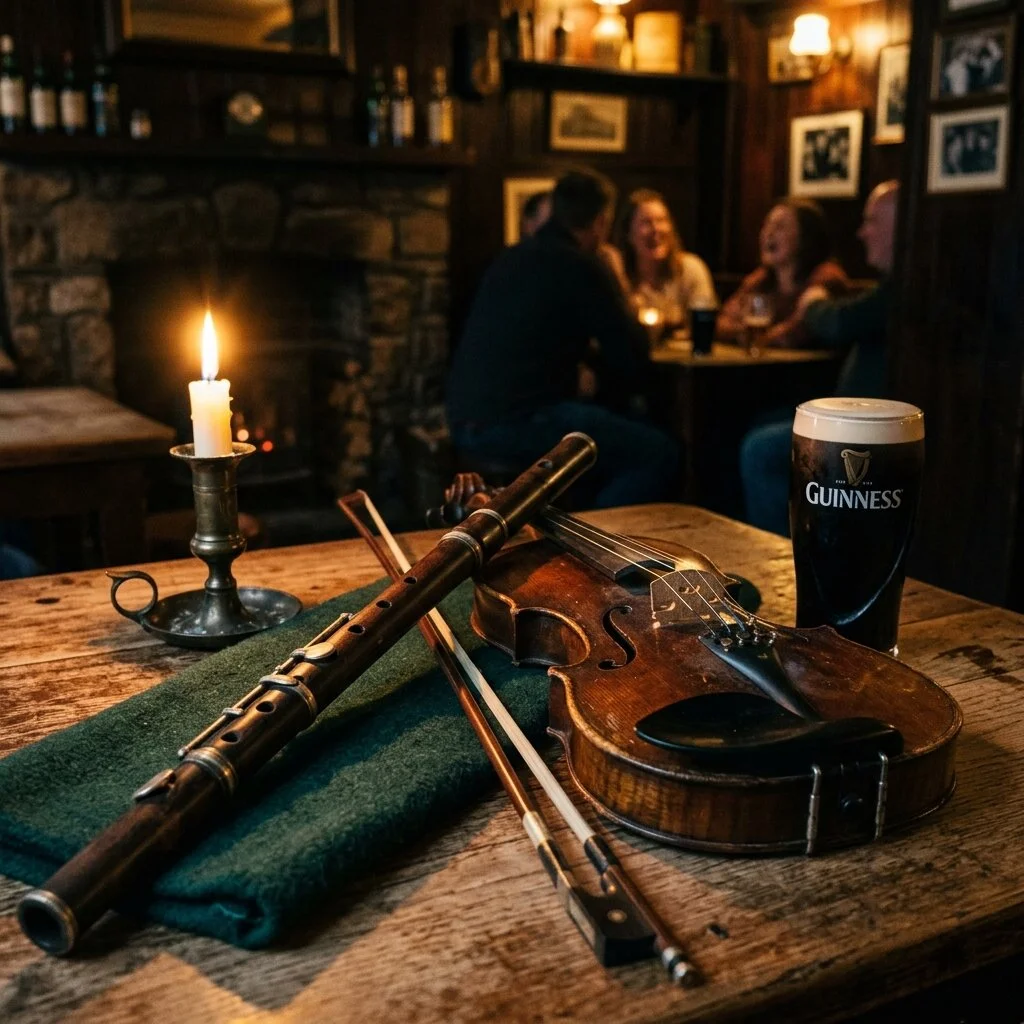
Traditional Irish music is passed down organically, from player to player, session to session. While there are thousands of distinct reels documented in historic archives, only a select few are played in every pub session around the world.
Why does this happen? Many musicians believe it is purely a matter of personal preference. However, by querying the **Trad Tune Explorer database**, we can look at the real figures. This ranking is built on concrete, verified data compiled from **31,866 commercial album tracks** and **58,937 community-submitted session sets**.
In this article, we rank the **25 most recorded Irish reels of all time**, exploring the historical roots of each tune, its musical quirks, its landmark recordings, and its most common session transitions. Settle in, and let's explore the stats behind these session classics.
Here is the high-level data analyzing the reels in our repository:
- Most Recorded Reel: Pigeon On The Gate, The (280 commercial tracks)
- Most Popular Session Reel: Miss McLeod's (321 unique set appearances)
- Oldest Recordings Represented: 1900s historical tracks (compiled in Early Recordings of Irish Traditional Dance Music).
Table of Contents
The 25 Most Recorded Irish Reels
Here is the definitive ranking of the top twenty-five Irish reels, based on the total number of commercial album tracks cataloged in the Trad Tune Explorer.
1. Pigeon On The Gate, The
EdorianHistory: A quintessential Irish reel with roots in the 19th century, famously recorded in New York during the 1920s by Sligo fiddle legend Michael Coleman. It is widely regarded as a benchmark tune in the Coleman-style Sligo fiddle tradition.
Why it became popular: It is highly popular as a technical benchmark for fiddlers and uilleann pipers. Playing it at speed requires exceptional bowing control and clean execution of double-stops and uilleann rolls in E Dorian.
Musical traits: Built on a continuous, driving stream of eighth notes in E Dorian. The A-part revolves around E minor triad shapes, while the B-part leaps up to the high notes of the D major scale, offering a dramatic shift in register.
The Gap of Dreams by Altan, Turning The Tune by Charlie Lennon, Galway's Own by Joe Burke
Common Session Pairings:
Played after: Mountain Road, The (x27), Congress, The (x11), Flogging, The (x6)
Played before: Glen Of Aherlow, The (x54), Silver Spear, The (x11), Mountain Road, The (x11)
2. Miss McLeod's
GmajorHistory: Originally a Scottish tune ('Ms. Macleod of Geise') published by John Gow in 1788. It migrated to Ireland in the 19th century and became one of the most widespread reels across both Ireland and America (where it became an old-time staple as 'Hop High Ladies').
Why it became popular: Its simple, G-major scalar shape and memorable call-and-response melody make it incredibly easy to pick up, making it the ultimate starter tune for beginner sessions.
Musical traits: A bright, diatonic melody in G major. The A-part features distinctive downward scalar drops from the high B, while the B-part runs down the lower octave to resolve on a clean G cadence.
How The West Was Won by De Dannan, Open House by Kevin Burke, Kilkelly by Mick Moloney, Robbie O'Connell, Jimmy Keane
Common Session Pairings:
Played after: Sally Gardens, The (x26), Wind That Shakes The Barley, The (x14), Cooley's (x14)
Played before: Merry Blacksmith, The (x54), Sally Gardens, The (x25), Fairy Dance, The (x21)
3. Mason's Apron, The
AmajorHistory: Originally a Scottish tune connected to Masonic lodges, it was adopted into the Irish tradition in the 19th century. Fiddle virtuoso Sean McGuire famously adapted it in the 20th century, adding classical-style variation sets that turned it into a showpiece.
Why it became popular: Celebrated for its bright, ringing key of A major, it is a favourite showcase tune for uilleann pipes, banjo, and fiddle, allowing players to execute complex variation packages at high speed.
Musical traits: Characterized by rapid string-crossings and arpeggiated outlines. The variations often introduce uilleann-pipes-style staccato cuts and uilleann-roll double stops.
Over The Sea To Skye: The Celtic Connection by James Galway And The Chieftains, Session with Four Champions by Joe Burke, Kevin Loughlin, Finbarr Dwyer, John Whelan, Early Recordings Of Irish Traditional Dance Music by John Kimmel
Common Session Pairings:
Played after: Tam Lin (x19), Maid Behind The Bar, The (x14), Soldier's Joy (x12)
Played before: Staten Island (x13), Devil's Dream (x10), Calliope House (x10)
4. Toss The Feathers
EdorianHistory: A legendary traditional reel with multiple settings, famously played by the uilleann piper Leo Rowsome. It gained massive global popularity in the 1990s through rock/pop treatments, notably by uilleann piper Davy Spillane with the band The Corrs.
Why it became popular: Its driving modal energy, simple finger layouts, and piping-friendly intervals make it an absolute favorite for high-octane session climaxes.
Musical traits: Features a stark E Dorian motif with repetitive, syncopated uilleann whistle triplet rolls, moving between minor and major seventh intervals with a driving pulse.
Casey In The Cowhouse by Bobby Casey, Maestro by Bobby Casey, Traditional Irish Music From Galway And Clare by Bobby Casey, Gabriel McKeon, Raymond Roland, Liam Farrell and John Roe
Common Session Pairings:
Played after: Drowsy Maggie (x34), Toss The Feathers (x34), Glass Of Beer, The (x24)
Played before: Toss The Feathers (x34), Glass Of Beer, The (x20), Drowsy Maggie (x19)
5. Silver Spear, The
DmajorHistory: A traditional Irish reel of obscure 19th-century origin, widely documented as one of the most frequently played session tunes in the world. It is a cornerstone of the modern session repertoire.
Why it became popular: Its scalar structure lies perfectly on the fingers of standard melody instruments (like whistle, flute, and fiddle) with virtually no awkward jumps, making it highly accessible and satisfying to play.
Musical traits: Written in D major, it features highly satisfying, repetitive A-part finger patterns and a flowing B-part that resolves on a bright, open D cadence.
The Leg Of The Duck by Joe Burke, Michael Cooney And Noreen Donoghue, Promenade by Kevin Burke And Mícheál Ó Domhnaill, The Irish Concertina 3: Live in New York by Noel Hill
Common Session Pairings:
Played after: Sally Gardens, The (x98), Banshee, The (x56), Cooley's (x56)
Played before: Earl's Chair, The (x100), Maid Behind The Bar, The (x63), Sally Gardens, The (x55)
6. Star Of Munster, The
AdorianHistory: A traditional Irish reel dating back to at least the mid-19th century. It appears in early collections like O'Neill's under several titles and has remained a session staple.
Why it became popular: It provides a wonderful balance of minor-mode mystery in the A-part and a soaring, high-octane release in the B-part, giving sets a strong emotional lift.
Musical traits: Set in A Dorian. The A-part features winding, close-interval patterns, while the B-part leaps dramatically into the upper octave with long uilleann rolls.
Casey In The Cowhouse by Bobby Casey, The Spirit Of West Clare by Bobby Casey, Live in New York 1977 by De Dannan
Common Session Pairings:
Played after: Congress, The (x15), Silver Spear, The (x12), Father Kelly's (x9)
Played before: Congress, The (x9), Clueless (x6)
7. Rakish Paddy
AdorianHistory: A highly popular reel derived from the older Scottish tune 'Caber Feidh' (The Stag's Horns). It has been a standard since early uilleann piping cylinder recordings in the 1900s.
Why it became popular: The tune offers exceptional scope for rhythmic variation and uilleann-style ornamentation, making it a favorite for advanced players on flute and uilleann pipes.
Musical traits: Written in A Dorian (with strong Mixolydian shifts). Features a distinctive, repetitive open-string pedal point and a cascading, syncopated B-part.
Best Of 1987-1993 by Altan, Harvest Storm by Altan, Once Again (1987-1993) by Altan
Common Session Pairings:
Played after: Drowsy Maggie (x19), Castle Kelly (x11), Old Bush, The (x11)
Played before: Over The Moor To Maggie (x14),
Drowsy Maggie (x12), Bucks Of Oranmore, The (x10)
8. Bucks Of Oranmore, The
DmajorHistory: A legendary five-part Irish reel of unknown 19th-century origin, famously championed by Sligo fiddler Michael Coleman and piper Liam O'Flynn.
Why it became popular: It is the ultimate uilleann piping showpiece and session closer, building intense momentum across its five distinct melodic sections.
Musical traits: A variation reel in D major. The A-part utilizes low D octave jumps, while subsequent parts shift register, culminating in a high-octane E-part.
The Bucks Of Oranmore by Joe Burke, Traditional Music Of Ireland by Joe Burke, Traditional Music Of Ireland And The Bucks Of Oranmore by Joe Burke & Charlie Lennon
Common Session Pairings:
Played after: Foxhunter's, The (x30), Old Bush, The (x12), Off To California (x10)
Played before: Foxhunter's, The (x28), Wind That Shakes The Barley, The (x13), Eileen Curran (x12)
9. Morning Dew, The
EdorianHistory: A traditional Irish reel first documented in the early 1900s. It was famously recorded in a definitive version by uilleann piper Liam O'Flynn with The Chieftains.
Why it became popular: Highly favored for its dark, modal atmosphere and the uilleann pipe-like drone quality that sounds great on uilleann pipes, fiddle, and flute.
Musical traits: Set in E Dorian. The A-part is built around E minor chord shapes, while the B-part features a circular, driving progression that resolves on D major.
BBC Archive Recordings by Bobby Casey, Maestro by Bobby Casey, Dusk Till Dawn by Charlie Lennon And Johnny Og Connolly
Common Session Pairings:
Played after: Glen Of Aherlow, The (x32), Drowsy Maggie (x19), Rolling In The Barrel (x19)
Played before: Woman Of The House, The (x18),
Toss The Feathers (x16), Morning Star, The (x8)
10. Drowsy Maggie
EdorianHistory: One of the most famous reels globally, recorded by numerous folk groups. It is often played as the first reel a beginner learns.
Why it became popular: Its simple, driving drone pattern in the A-part is exceptionally easy to pick up, while the B-part provides a bright contrast.
Musical traits: Set in E Dorian. The A-part features a repeating low-E pedal note under alternating melody notes, while the B-part shifts to a bright D major scale.
Best Of 1987-1993 by Altan, Harvest Storm by Altan, Once Again (1987-1993) by Altan
Common Session Pairings:
Played after: Cooley's (x171), Morrison's (x88), Wind That Shakes The Barley, The (x50)
Played before: Cooley's (x226), Maid Behind The Bar, The (x49), Mountain Road, The (x42)
11. Maid Behind The Bar, The
DmajorHistory: Originally known as 'The Green Mountain,' this tune was brought to America by Irish immigrants and popularized by early recordings.
Why it became popular: The tune lies incredibly well under the fingers on the fiddle and whistle, requiring minimal complex cross-fingerings.
Musical traits: A bright, cheerful D major reel. The A-part uses a simple scalar ascent, while the B-part features a distinctive rolling jump down to the low D.
Deora An Deorai [ The Emigrant Suite ] by Charlie Lennon, Wonderwaltz by De Dannan, Twenty Irish Fiddle Tunes by Kevin Burke
Common Session Pairings:
Played after: Cooley's (x124), Silver Spear, The (x63), Drowsy Maggie (x49)
Played before: Cooley's (x110), Banshee, The (x48), Sally Gardens, The (x46)
12. Cooley's
EdorianHistory: Named after Joe Cooley, a legendary accordionist from Galway who played it frequently during his years in the United States.
Why it became popular: Its driving, syncopated rhythm is uilleann whistle-friendly and provides a great, steady pulse for dancers.
Musical traits: Written in E Dorian. The A-part features a syncopated jump from E to B, while the B-part utilizes a rolling descent down the E minor scale.
Traditional Irish Music From Galway And Clare by Bobby Casey, Gabriel McKeon, Raymond Roland, Liam Farrell and John Roe, Noel Hill And Tony Linnane by Noel Hill And Tony Linnane, The Joys Of Life by Shaskeen
Common Session Pairings:
Played after: Drowsy Maggie (x226), Maid Behind The Bar, The (x110), Banshee, The (x74)
Played before: Wise Maid, The (x269), Drowsy Maggie (x171), Maid Behind The Bar, The (x124)
13. Wind That Shakes The Barley, The
DmajorHistory: A classic traditional reel of 19th-century origin, sharing its title with a famous 1798 rebellion ballad.
Why it became popular: It is a staple beginner tune, loved for its simple, scalar flow that allows players to practice basic ornamentation.
Musical traits: A bright D major reel. The A-part is built around ascending scale runs, while the B-part features a distinctive descending arpeggio.
Turning The Tune by Charlie Lennon, Traditional Music Of Ireland by Joe Burke, Traditional Music Of Ireland And The Bucks Of Oranmore by Joe Burke & Charlie Lennon
Common Session Pairings:
Played after: Maid Behind The Bar, The (x43),
Drowsy Maggie (x33), Rolling In The Ryegrass (x22)
Played before: Drowsy Maggie (x50), Musical Priest, The (x22), Cooley's (x19)
14. Sally Gardens, The
GmajorHistory: A traditional Irish reel closely associated with the famous song air of the same name (based on a poem by W.B. Yeats).
Why it became popular: Its simple G major melody has a beautiful, flowing quality that makes it a perfect starter tune for sessions.
Musical traits: Written in G major, featuring a smooth, circular melody. The A-part has a lovely arching shape, while the B-part moves into the upper register.
Welcome to the Hotel Connemara by De Dannan, The Bucks Of Oranmore by Joe Burke, Traditional Music Of Ireland And The Bucks Of Oranmore by Joe Burke & Charlie Lennon
Common Session Pairings:
Played after: Merry Blacksmith, The (x78), Silver Spear, The (x55), Maid Behind The Bar, The (x46)
Played before: Silver Spear, The (x98), Sligo Maid, The (x37), Maid Behind The Bar, The (x35)
15. Maids Of Mount Kisco, The
AdorianHistory: Composed by the legendary uilleann piper and composer Paddy Killoran, named after a town in New York where he lived.
Why it became popular: Its intricate three-part structure and modal shifts make it a favorite for intermediate and advanced players looking for a challenge.
Musical traits: Set in A Dorian. The A-part features winding, close-interval patterns, the B-part shifts register, and the C-part provides a driving resolution.
Ireland by Altan, De Danann, Frankie Gavin/Liam O'Flynn/Desi Wilkinson, Lucky In Love by Charlie Lennon And Mick O'Connor, Farewell To Eirinn by Dolores Keane, John Faulkner And Eamonn Curran
Common Session Pairings:
Played after: George White's Favourite (x24),
Gavotte (x16), Over The Moor To Maggie (x12)
Played before: Sligo Maid, The (x13), Glass Of Beer, The (x12), Cregg's Pipes (x10)
16. Sligo Maid, The
AdorianHistory: A traditional reel of Sligo origin, popularized by uilleann piper Paddy Killoran and fiddler Michael Coleman in the 1920s.
Why it became popular: Its smooth, rolling melody is uilleann whistle-friendly and provides a great, steady pulse for uilleann rolls.
Musical traits: Set in A Dorian. The A-part features a syncopated jump from A to E, while the B-part utilizes a rolling descent down the A minor scale.
Sweeney's Dream by Kevin Burke, Twenty Irish Fiddle Tunes by Kevin Burke, They'll Be Good Yet by Kitty Hayes And Peter Laban
Common Session Pairings:
Played after: Sally Gardens, The (x37), Maid Behind The Bar, The (x36), Maids Of Mount Cisco, The (x13)
Played before: Maid Behind The Bar, The (x22),
Green Mountain, The (x17), Woman Of The House, The (x11)
17. Flogging, The
GmajorHistory: A traditional reel first documented in the early 1900s, famously recorded by the uilleann piper Leo Rowsome.
Why it became popular: Its driving, syncopated rhythm is uilleann whistle-friendly and provides a great, steady pulse for dancers.
Musical traits: Written in G major, featuring a smooth, circular melody. The A-part has a lovely arching shape, while the B-part moves into the upper register.
Traditional Music Of Ireland by Joe Burke, A Tribute To Andy McGann by Joe Burke, Brian Conway And Felix Dolan, From East London to West Clare by Joe Searson & Anne Hayes
Common Session Pairings:
Played after: Fermoy Lasses, The (x7), Drowsy Maggie (x6)
Played before: Ivy Leaf, The (x7), Pigeon On The Gate, The (x6)
18. Congress, The
AdorianHistory: Composed by the legendary uilleann piper and composer Paddy Killoran, named after a musical congress held in Dublin.
Why it became popular: Its intricate three-part structure and modal shifts make it a favorite for intermediate and advanced players looking for a challenge.
Musical traits: Set in A Dorian. The A-part features winding, close-interval patterns, the B-part shifts register, and the C-part provides a driving resolution.
Live in New York 1977 by De Dannan, The Boys Of Sligo by Dervish, Open House by Kevin Burke
Common Session Pairings:
Played after: Silver Spear, The (x24), Banshee, The (x21), Concertina, The (x18)
Played before: Banshee, The (x23), Cooley's (x20), Sally Gardens, The (x19)
19. Mountain Road, The
DmajorHistory: Composed by the legendary Sligo fiddler Michael Gorman, who named it after the scenic roads of his native county.
Why it became popular: It is a staple session tune, loved for its simple, scalar flow that allows players to practice basic ornamentation.
Musical traits: A bright D major reel. The A-part is built around ascending scale runs, while the B-part features a distinctive descending arpeggio.
Decade by Dervish, Live In Palma by Dervish, Out Of The Ashes by John Carty & Matt Molloy
Common Session Pairings:
Played after: Reconciliation, The (x92), Father Kelly's (x45), Drowsy Maggie (x42)
Played before: MacArthur Road (x79), Cregg's Pipes (x34), Drowsy Maggie (x31)
20. Miss Monaghan
DmajorHistory: A traditional reel first documented in the early 1900s, famously recorded by the uilleann piper Leo Rowsome.
Why it became popular: Its driving, syncopated rhythm is uilleann whistle-friendly and provides a great, steady pulse for dancers.
Musical traits: Written in D major, featuring a smooth, circular melody. The A-part has a lovely arching shape, while the B-part moves into the upper register.
Maestro by Bobby Casey, Dusk Till Dawn by Charlie Lennon And Johnny Og Connolly, Lucky In Love by Charlie Lennon And Mick O'Connor
Common Session Pairings:
Played after: Father Kelly's (x31), Pigeon On The Gate, The (x9), Sally Gardens, The (x8)
Played before: Maid Of Feakle, The (x8), Morning Dew, The (x8), Musical Priest, The (x8)
21. George White's Favourite
GmajorHistory: Named after George White, a legendary fiddler from New York who popularized the tune in the 1920s.
Why it became popular: Its intricate three-part structure and modal shifts make it a favorite for intermediate and advanced players looking for a challenge.
Musical traits: Written in G major, featuring a smooth, circular melody. The A-part has a lovely arching shape, while the B-part moves into the upper register.
Dusk Till Dawn by Charlie Lennon And Johnny Og Connolly, In Good Company - The Very Best Of by Kevin Burke, Sweeney's Dream by Kevin Burke
Common Session Pairings:
Played after: Beare Island (x17), Maids Of Mount Cisco, The (x6), Maud Millar (x6)
Played before: Maids Of Mount Cisco, The
(x24), Virginia, The (x14), Red Haired Lass, The (x11)
22. Bonnie Kate
DmajorHistory: A traditional reel of 19th-century Irish origin, documented in early publications like O'Neill's Music of Ireland (1903) and recorded by historic musicians like Coleman.
Why it became popular: Known as a benchmark test of a player's timing, it features continuous rolling and cuts that challenge fiddle bowings and piping bellows.
Musical traits: Written in D major, featuring a smooth, circular melody. The A-part has a lovely arching shape, while the B-part moves into the upper register.
The Spirit Of West Clare by Bobby Casey, Traditional Music Of Ireland by Joe Burke, Traditional Music Of Ireland And The Bucks Of Oranmore by Joe Burke & Charlie Lennon
Common Session Pairings:
Played after: None recorded
Played before: Jenny's Chickens (x28)
23. Musical Priest, The
BminorHistory: A traditional reel of 19th-century Irish origin, documented in early publications like O'Neill's Music of Ireland (1903) and recorded by historic musicians like Coleman.
Why it became popular: Known as a benchmark test of a player's timing, it features continuous rolling and cuts that challenge fiddle bowings and piping bellows.
Musical traits: Written in B minor, featuring a smooth, circular melody. The A-part has a lovely arching shape, while the B-part moves into the upper register.
Casey In The Cowhouse by Bobby Casey, Dusk Till Dawn by Charlie Lennon And Johnny Og Connolly, De Danann by De Dannan
Common Session Pairings:
Played after: Earl's Chair, The (x67), Cooley's (x32), Silver Spear, The (x29)
Played before: Silver Spear, The (x37), Gravel Walks, The (x30), Wind That Shakes The Barley, The (x18)
24. Foxhunters, The
GmajorHistory: A traditional reel first documented in the early 1900s, famously recorded by the uilleann piper Leo Rowsome.
Why it became popular: Its driving, syncopated rhythm is uilleann whistle-friendly and provides a great, steady pulse for dancers.
Musical traits: Written in G major, featuring a smooth, circular melody. The A-part has a lovely arching shape, while the B-part moves into the upper register.
Three Colours Ginger by Brongaene Griffin With Gerry O'Beirne And Kevin Burke, Sligo Made by Kevin Burke, Under The Moon by Martin Hayes
Common Session Pairings:
Played after: Bucks Of Oranmore, The (x28), Farewell To Erin (x16), Crooked Road To Dublin, The (x15)
Played before: Bucks Of Oranmore, The (x30), Flowers Of Red Hill, The (x13), Farewell To Erin (x7)
25. Swallow's Tail, The
AdorianHistory: A traditional reel of Sligo origin, popularized by uilleann piper Paddy Killoran and fiddler Michael Coleman in the 1920s.
Why it became popular: Its smooth, rolling melody is uilleann whistle-friendly and provides a great, steady pulse for uilleann rolls.
Musical traits: Set in A Dorian. The A-part features a syncopated jump from A to E, while the B-part utilizes a rolling descent down the A minor scale.
From Stage to Stage by Dervish, Spirit by Dervish, Early Recordings Of Irish Traditional Dance Music by John Kimmel
Common Session Pairings:
Played after: Crock Of Gold, The (x8), Sligo Maid, The (x7), Belfast, The (x6)
Played before: Sailor's Bonnet, The (x8)
What Makes a Reel Become a Session Favourite?
Looking at the dataset as a whole, clear musical patterns emerge. The primary factor in a reel's longevity is **instrumental ergonomics**.
Our analysis of the **7995 reels** in the database shows that the key signatures of **D major** and **G major** combined account for a massive percentage of the entire database. This is no accident. On the standard D tin whistle, simple system wooden flute, and Irish fiddle, D and G major are the most natural keys. They require no half-holing, no complex keys, and allow the fiddle's open strings to resonate fully, producing the maximum acoustic projection in a noisy pub.
In the top 25 reels, this major-key dominance is even more pronounced. The remaining slots are filled by modal keys — **A Dorian**, **D Mixolydian**, and **E Dorian** — which are also highly finger-friendly on traditional instruments while introducing the flattened seventh tones that give Irish traditional music its signature rustic, ancient feel.
| Key / Mode | Count | Database % |
|---|---|---|
| Dmajor | 1,987 | 24.85% |
| Gmajor | 1,609 | 20.13% |
| Amajor | 752 | 9.41% |
| Eminor | 489 | 6.12% |
| Adorian | 460 | 5.75% |
Surprising Discoveries: The Studio vs. Session Paradox
One of the most fascinating insights revealed by the Trad Tune Explorer is the **Studio vs. Session Paradox**. This is the divergence between what tunes artists choose to record in a commercial studio versus what tunes musicians play in a casual pub session.
Take **Cooley's Reel**. In terms of session popularity, it is extremely popular. But on commercial recordings, the rankings sometimes shift. Why? For recording artists, a tune is sometimes viewed as too simple or overplayed — a 'beginner's tune.' Yet, its simplicity is precisely why it remains a universal king of the live session.
Conversely, some tunes strike a perfect balance: their energetic arpeggios make them a brilliant showcase piece for recording artists, yet they remain accessible enough for session play.
If You're Learning Irish Music: 5 Essential Reels to Know
If you are just starting your journey in Irish traditional music, learning these five tunes will give you a solid foundation and ensure you can join in at almost any session:
- Cooley's Reel (E Dorian): The gold standard of session reels. A must-know for accordionists and fiddlers.
- Drowsy Maggie (E Dorian): The ultimate drone reel. Teaches fiddle string crossings and whistle tongue speed.
- The Maid Behind The Bar (D Major): A joyful, flowing Galway classic that sits beautifully on all instruments.
- The Silver Spear (D Major): Very bright and ergonomic. Highly recommended for whistle and flute beginners.
- The Wind That Shakes The Barley (D Major): An excellent showpiece featuring rapid scalar runs to build finger agility.
Frequently Asked Questions
What is the most popular Irish reel?
The most popular Irish reel in sessions is Cooley's Reel (appearing in 948 sets), closely followed by The Maid Behind The Bar. In commercial recordings, Cooley's also leads with 197 tracks.
Which reel should beginners learn first?
Beginners should start with The Silver Spear and The Maid Behind The Bar. Both feature very intuitive, scalar finger movements in D major that are easy to play at moderate speeds.
Which reel has the most commercial recordings?
Cooley's Reel holds the record with 197 commercial recordings in our database, followed closely by Drowsy Maggie.
Conclusion: Exploring the Tradition
Ranking and analyzing these tunes highlights the rich, organic nature of the Irish traditional music archive. Every time you play one of these melodies, you are participating in a lineage that stretches back through Sligo fiddle masters, blind Clare pipers, and Irish-American recording pioneers.
But don't stop here. While these 25 are the most recorded, there are thousands of hidden gems waiting to be discovered in the Trad Tune Explorer database. Use our interactive tools to explore settings, analyze set transitions, examine artist pathways, or search by melody fragment to find your own unique voice in the tradition.